APOCYNACEAE. 'DOG BANE'. Interesting easily grown hardy perennials with caustic milky juice. Small white or pink flowers. Roots medicinal. Prefers sandy, dry soil.
—Apocynum cannabinum. (100) APOC-7. Packet: $2.50
Gram: $7.50
'INDIAN HEMP DOGBANE', 'RHEUMATISM ROOT'. Small white bell-shaped flowers on a hardy perennial to 4 feet, with ovate 2 - 6" leaves and slender paired pods. North America. Zone 4. Good perennial for naturalizing, best in moist part shade. Indians made strong fiber from the stems, chewed the latex like gum, and the root is valued medicinally as an emetic and cardiac stimulant. Germinates in 1 - 3 weeks.
AQUILEGIA (ak-wi-LE-jee-a)
RANUNCULACEAE. 'COLUMBINE'. One of the most valuable hardy perennials, grown for its attractive foliage and pretty, spurred flowers, which are unequalled for their grace and color. A light, sandy, moist soil in a sheltered position is preferable. Many stand half shade well, and they are favorites in the rock garden and perennial border. Excellent for cut flowers. Seed sown early may bloom the first year, and will give good bloom the second season. Germination may be slow and erratic; best at below 65°F and in bright, indirect light. October to February sowings give good results, or give 3 weeks cold treatment to germinate in 9 - 30 days, and rarely up to 6 months for some species. Space 12 - 18" apart. The seed is viable for 5 years or more, and aged seed often germinates best. A prechill or GA-3 may help.
Long Spurred Columbines:
These are all excellent strains, noted for their large flowers with long, graceful spurs, in beautiful colors. They make nice cut flowers. Of mixed parentage, primarily canadensis, vulgaris, and chrysantha. Zone 3. These germinate readily in 2 - 6 weeks warm, and GA-3 helps.
—Aquilegia 'Biedermeier Dwarf Mix'. (100) AQUI-1B. Packet: $2.50
Gram: $7.50
Dwarf bushy plants to 10 - 14" tall, with bright flowers in a good range of colors in May and June.
—Aquilegia 'Crimson Star'. (100) AQUI-1C. Packet: $2.50
Gram: $7.50
Brilliant crimson flowers with white petals and long, graceful spurs. A fine variety.
—Aquilegia 'Crystal Star'. (50) AQUI-1CY. Packet: $2.50
Gram: $7.50
Pure white, long-spurred flowers. A lovely variety. To 2 feet.
Aquilegia Species:
—Aquilegia alpina. (100) AQUI-2. Packet: $2.50
Gram: $7.50
'ALPINE COLUMBINE'. Large blue flowers 2" across, with short, hooked spurs, in July and August. Hardy perennial to 12 - 15". Swiss Alps. Zone 3. Seed germinates in about 2 - 6 weeks warm, prechill or GA-3 helps.
—Aquilegia atrata. (40) AQUI-3. Packet: $3.00
Gram: $14.00
'DARK COLUMBINE'. Dark purple-black flowers with contrasting yellow stamens, on a hardy perennial to 20". Alps. Choice. Aged seed germinates in 3 - 6 weeks, fresh seed needs 3 weeks cold, or GA-3. Zone 4.
—Aquilegia caerulea Wild. (100) AQUI-10W. Packet: $2.50
5 grams: $10.00
'COLORADO COLUMBINE'. Blue flowers on a hardy perennial to 2 - 3 feet. Seed collected from the wild at 9500 feet, in Larimer County, Colorado. Zone 4. Germinates in 2 - 6 weeks warm.
—Aquilegia canadensis. (500) AQUI-11. Packet: $2.50
1/4 Ounce: $8.00, Ounce: $25.00
'COMMON AMERICAN COLUMBINE', 'JACK-IN-TROUSERS'. Nodding red and yellow 1 1/2" flowers from May to July. Hardy perennial to 1 - 2 feet. E. U.S. Zone 2. Children suck the flower nectar, and the roots are said to have been eaten by Indians. Aged seed germinates in 2 - 4 weeks, fresh seed needs cold treatment or GA-3.
—Aquilegia chrysantha Wildform. (50) AQUI-12W. Packet: $2.50
Click for photo »

'GOLDEN COLUMBINE'. Large golden yellow 2 - 3" flowers in May to August, on a hardy perennial to 3 1/2 feet. Arizona and New Mexico to southern Utah and Colorado. Zone 3. Germinates best with GA-3.
—Aquilegia flabellata 'Ministar'. (50) AQUI-15M. Packet: $3.00
Bright blue flowers with white centers on a dwarf compact hardy perennial to only 6" tall. Japan. Zone 3. Excellent for rock gardens and charming in pots. "Darn nice one."—Bertrand. Germinates in 3 - 5 weeks.
—Aquilegia flavescens. (25) AQUI-17. Packet: $2.50
Nodding yellow flowers, often tinged pink, in May and June. Hardy perennial to 2 feet. Rocky Mountains. Zone 3. Short prechill helps germination.
—Aquilegia formosa. (100) AQUI-16. Packet: $2.50
Gram: $7.50
'WESTERN COLUMBINE'. Nodding red and yellow short-spurred flowers in spring. Hardy perennial to 2 feet. Western U.S. Zone 3. Prechill seed.
—Aquilegia nevadensis. (20) AQUI-33. Packet: $2.50
Nodding pale blue-purple flowers with curved spurs. Hardy perennial to 2 feet. Spain. Zone 5.
—Aquilegia olympica. (25) AQUI-34. Packet: $2.50
Large blue and white 3 - 4" long spurred flowers on a robust hardy perennial to 2 1/2 feet. W. Asia. "Looks like a caerulea on steroids. Quite a bit nicer, actually. A second year plant has 40 - 50 blooms." Zone 5. Germinates in 2 - 4 weeks, sometimes needs a prechill.
—Aquilegia rockii. (25) AQUI-40. Packet: $2.50
Reddish lilac slender flowers with white-edged center, May to July. Hardy perennial to 16". Tibet. Zone 6. Prechill seed or give GA-3.
—Aquilegia sibirica. (25) AQUI-44. Packet: $2.50
'SIBERIAN COLUMBINE'. Large blue nodding flowers with white centers and hooked spurs, held above the foliage. Very hardy perennial to 16", blooming in spring. Siberia. Zone 2. Germ: irregular.
—Aquilegia vulgaris 'Black Barlow'. (25) AQUI-48BB. Packet: $2.50
A wonderful deep purple-black variety of Barlow columbine, fully double and upward facing. Good cut flower. Choice! Zone 3. Germinates in 2 - 5 weeks.
—Aquilegia vulgaris 'Christa Barlow'. (25) AQUI-48CB. Packet: $2.50
Large dark blue double spurless flowers, each petal edged white. Hardy perennial to 32" Elegant! Germinates in 2 - 4 weeks without prechill.
—Aquilegia vulgaris 'Grandmother's Garden'. (100) AQUI-44GG. Packet: $2.50
Gram: $7.50
Mix of old-fashioned short-spurred types, with blooms in pink, violet, and wine-red, in early Summer. Hardy perennial to 2 feet. Zone 3.
—Aquilegia vulgaris 'Green Apples'. (25) AQUI-48GA. Packet: $2.50
Fully double spurless creamy white flowers with apple-green tips. Hardy perennial to 32". Sometimes called 'Lemon Sherbet'. Nice among the dark-colored columbines. No prechill needed, germinates in 2 - 4 weeks.
"Things are more like they are now than they have ever been before."—Dwight D. Eisenhower.
ARBUTUS (AR-bu-tus)
ERICACEAE. Striking warm region evergreen trees with smooth red bark, clustered urn-shaped flowers, and red or orange berries. Valuable for landscaping, firewood, wildlife food, and edible berries. Interesting disjunct distribution—western Europe and western North America.
—Arbutus Unedo. (100) ARBU-19. Packet: $2.50
Click for photos »
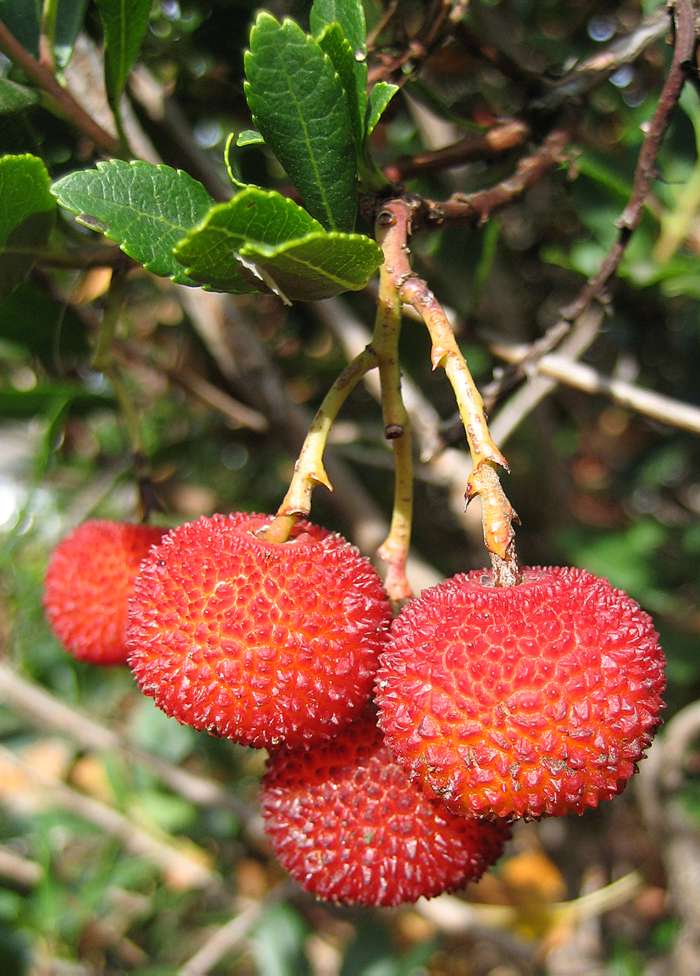

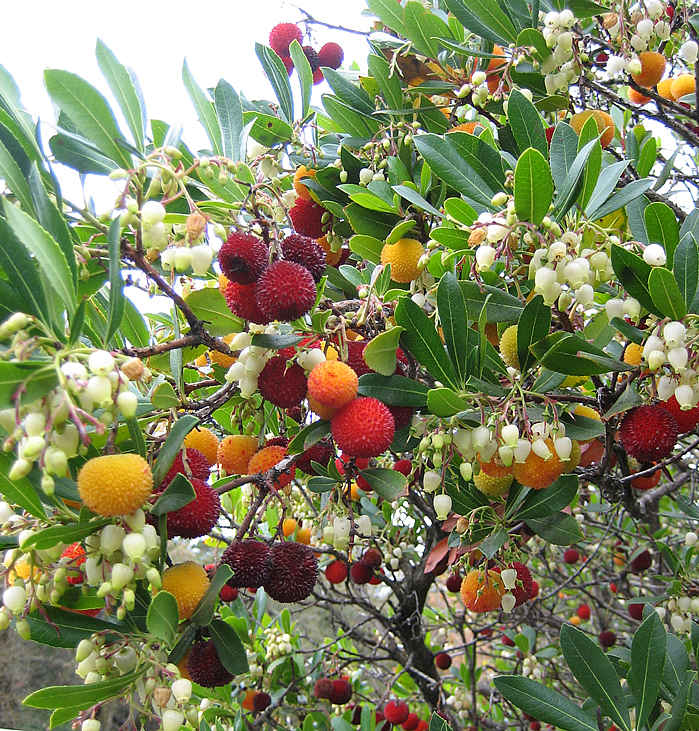
'STRAWBERRY TREE'. White or pinkish 1/4" flowers in drooping 2" clusters, followed by edible scarlet 3/4" fruits. Shrub or tree to 30 feet, with glossy green 4" leaves. S. Europe to Ireland. Hardy to Georgia and on the Pacific Coast. Zone 7. Makes a striking display as a specimen shrub. Fruits have a banana-like consistency, and are sweet and good eaten raw or as preserves, syrup, or fermented and distilled. Produces a rare, highly-esteemed honey in Sardinia. Prechill seed 4 - 8 weeks to germinate in 4 weeks.
ARCTIUM (ARK-tee-um)
COMPOSITAE. 'BURDOCK'. Large coarse biennials and perennials with large leaves and burr-like heads of purple to white flowers. Some are cultivated for edible roots or medicinal purposes. Others are weeds of undisturbed land; easily destroyed by cultivation.
—Arctium Lappa. (50) ARCI-3. Packet: $2.50 OTC ORGANIC SEED
Ounce: $7.50, 1/4 pound: $20.00
'GOBO', 'GREAT BURDOCK'. Giant hardy perennial to 10 feet, with purple-red 1 3/4" thistle-like flowers and large 20" leaves, white-woolly beneath. Eurasia. Zone 3. Often regarded as a 'weed' in the U.S., this is a popular vegetable in Japan. The young first-year roots are eaten, the young peeled shoots are eaten as an asparagus. Sow in deep rich soil in spring for a fall harvest, or in fall for spring crop. The seeds are an important medicine in Japan and China, and have antibiotic properties. Germinates in 1 - 2 weeks.
ARGEMONE (ar-je-MOE-nee)
PAPAVERACEAE. 'PRICKLY POPPY', 'ARGEMONY'. Showy annuals grown for their magnificent, poppy-like, yellow, white or purple flowers and for the striking foliage. Easily grown, standing hot, dry, barren soils and drought. Sow where they are to stand, or transplant from pots. Seed germinates readily in some species, others need to be fall sown, and some need GA-3. Seed half-life 4 - 5 years. "Handsome and unusual."—Booth.
NEW—Argemone glauca. (100) ARGE-10. Packet: $2.50
'PUA-KALA', 'HAWAIIAN PRICKLY POPPY'. Large 3" white flowers with orange stamens and a red-tipped pistil. Greyish annual to 1 - 4 feet. Known only from Hawaii; distinct from intermedia. The juice was used for toothache, ulcers, etc.
—Argemone polyanthemos. (200) ARGE-20. Packet: $2.50
5 grams: $7.50
'WHITE PRICKLY-POPPY'. Large diaphanous white poppy-like 3 - 4" blooms. Large prickly hardy annual or biennial to 4 feet. Eastern base of the Rockies. Striking in bloom. Seed viable 4 - 5 years. Germination may be helped by high temperatures (90°F), prechill, or 250 ppm GA-3.
ARIOCARPUS: See Reserved Access page.
ARISAEMA (a-ri-SAY-ma)
ARACEAE. Many herbaceous perennial aroids valued for their curious spathes and leaves. Best in moist shady places, woods, and the tender species in the greenhouse. Keep dry during winter dormancy. Some germinate readily, others are dormant.
Arisaemas often do best by soaking 48 hours then sowing, to germinate in 1 -2 months.
Arisaema pictures: http://www.kalle-k.dk/Arisaema.htm
—Arisaema flavum. (25) ARIS-9. Packet: $2.50
5 grams: $15.00
Click for photo »
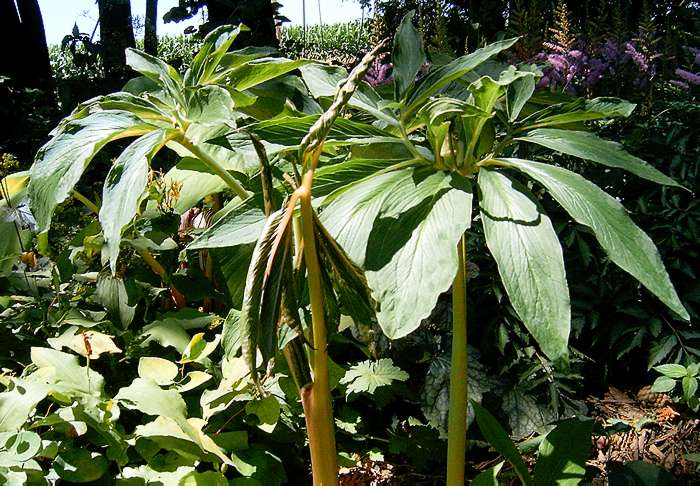
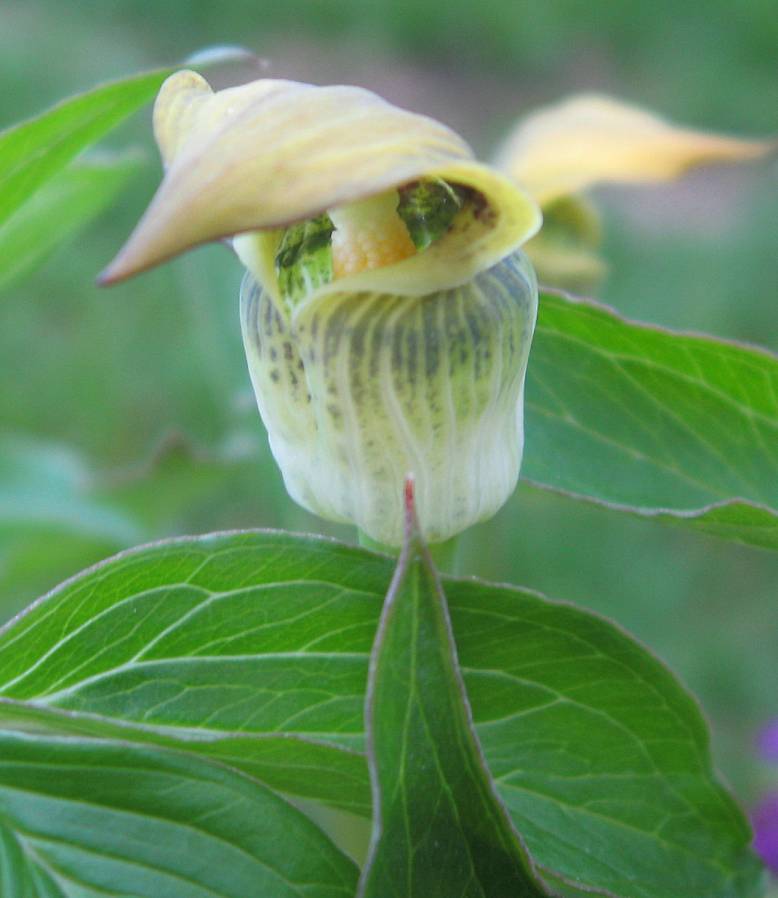
Neat little yellow hoods under 2" long, purple inside, in early summer. Hardy species (Zone 4) to 9 - 12" tall, with pedately divided 5" leaves. Yemen to the Himalayas and China. Colonizes well. Hardy to zone 5 at least. Germinates in 1 - 8 weeks warm, shade flat.
—Arisaema tortuosum. (10) ARIS-26. Packet: $3.00
'RATSTAIL COBRA FLOWER'. Hooded green 6" spathe, pale purple inside, with a long, curved, tail-like appendage. Perennial to 3 - 4 feet, with stem and leaves mottled purple. Himalayas to 8000 feet. Zone 7. The large corms are medicinal and poisonous, but eaten by Nepali mountaineers after preparation.
—Arisaema triphyllum. (10) ARIS-27. Packet: $2.50
'JACK-IN-THE-PULPIT', 'INDIAN TURNIP', 'MEMORY ROOT'. Hooded purple striped spathes. Hardy perennial to 3 feet. Red berries. E. North America. The fresh root is very poisonous, and was used by the Indians for headache, asthma, and rheumatism. After roasting they were eaten as a delicacy by the Indians. As the plant grows, it passes from infertile, to male, and finally to female. Germinates in 1 week to 10 months warm. May need cold to trigger leaf formation. Plant in the shade.
ARISTOLOCHIA (a-ris-to-LO-kee-a)
ARISTOLOCHIACEAE. Mostly tropical climbers, and some hardy perennials, grown for their extraordinarily peculiar flowers, and the attractive heart-shaped foliage. The remarkable curved flowers temporarily trap pollinating insects much like pitcher plants. Some are specific butterfly host-plants. Some are medicinal, ranging from fertility control, to snake bite remedies to arrow poisons. Easy from seed in ordinary soil.
—Aristolochia Clematitis. (10) ARST-4. Packet: $3.00
'BIRTHWORT'. Clustered bright yellow oddly shaped 1 1/2" flowers from May to July. Upright hardy perennial to 1 - 3 feet, with heart-shaped leaves. S. Europe. An old medicinal plant, known to the ancient Greeks, long used as an emmenagogue, to aid childbirth, and as snakebite antidote. GA-3 helps germination.
—Aristolochia fimbriata. (10) ARST-7. Packet: $2.50
Click for photo »

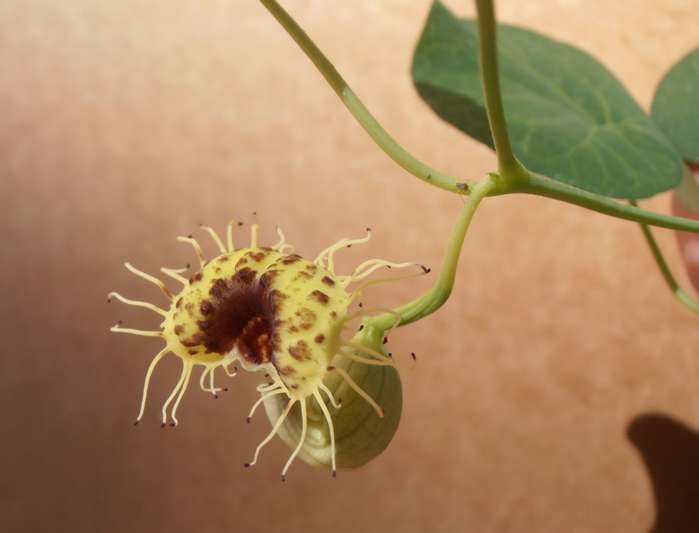
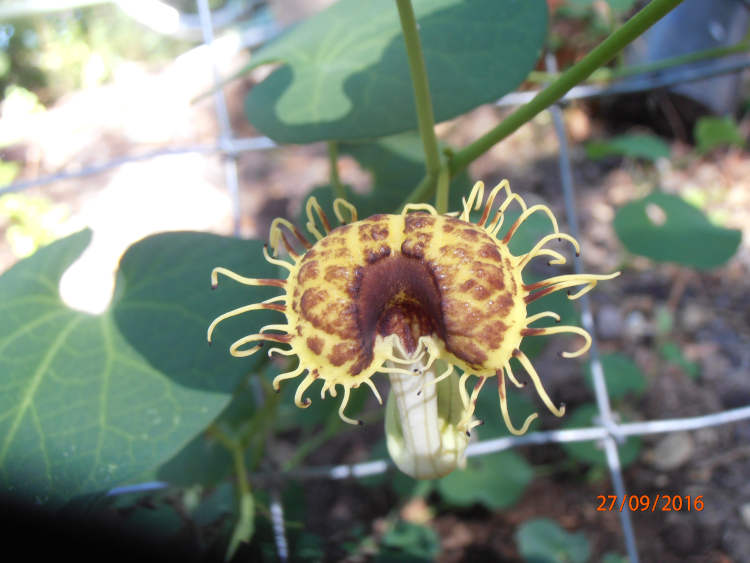
Remarkable peculiar flowers with curved tube and round, inch-wide, purple-brown end veined yellow, with a fringe of thread-like lobes, in fall. Not cool enough for you? They smell of brandy... Small creeping vine to 10 feet, with round 3" leaves with silvery veins. Brazil and Argentina. Zone 8. Germinates in 3 weeks, with some stragglers to 6 months.
—Aristolochia watsonii. (10) ARST-106. Packet: $2.50
'WATSON'S PIPEVINE'. Odd narrow purple-brown and yellowish inch long flowers. Desert vine, sprawling to 3 feet, with red-purple arrowhead- shaped leaves. Forms a tuber. Arizona and New Mexico. Put in hot tap water and soak 2 days.
ARNICA (AR-ni-ka)
COMPOSITAE. Hardy perennial yellow daisies, valued in the wild and rock garden. Quick growing in acid soil and easy from seed.
—Arnica Chamissonis. (100) ARNI-5. Packet: $2.50
Gram $15.00, 5 grams: $60.00 NEW PRICE
'MEADOW ARNICA'. Bright yellow 2" daisies in summer. Hardy perennial to 2 - 3 feet, with 6" leaves. W. N. America. Zone 2. Highly valued as medicine, considered equivalent to Arnica montana. Easily grown in moist soil. Germinates in 1 - 3 weeks.
—Arnica montana. (25) ARNI-11. Packet: $3.00
Gram $15.00
'MOUNTAIN TOBACCO'. Large golden 3" daisies on a hardy perennial to 24", with a rosette of 8" leaves. Europe and W. Asia. Blooms May to August. Best in well-drained lime-free soil and full sun. Zone 5. A tincture of the flowers and roots is a famous remedy for sprains and bruises. Germinates in 2 - 7 weeks.
ARTEMISIA (ar-te-MEE-see-a)
COMPOSITAE. 'WORMWOOD', 'SAGEBRUSH'. A large genus of aromatic and bitter plants, many of which are valuable culinary and medicinal herbs. Named for the Greek goddess Artemis. Easily grown in poor dry soil—many thrive in arid regions. Grown as nice specimen plants for their small yellow or white disk flowers and often attractive greyish foliage. Sow on the surface, to germinate in 1 - 6 weeks. Seed viable 3 - 9 years.
—Artemisia Absinthium. (1000) ARTE-2. Packet: $2.50
10 grams: $22.00, 50 grams: $95.00 NEW PRICE
Click for photo »
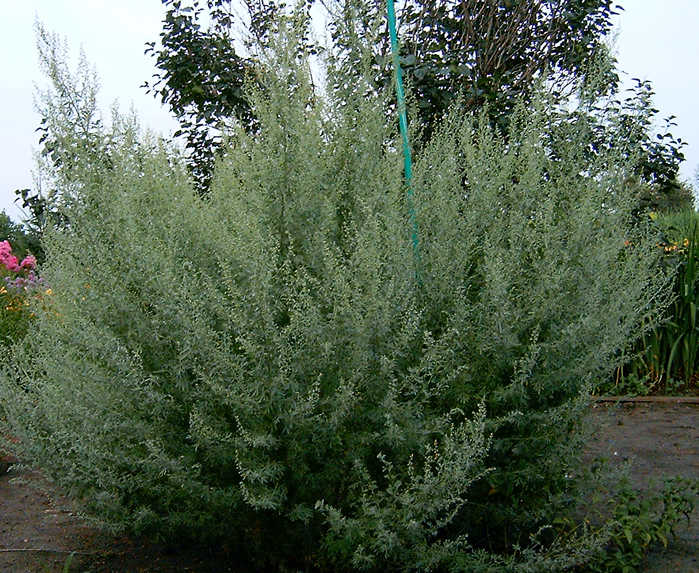
'WORMWOOD', 'ABSINTHE'. Shrubby hardy perennial to 2 - 5 feet, with greyish, silky, divided foliage and leafy spikes of little nodding flowers in July to October. Europe. Zone 3. Sun or part shade. A valuable bitter medicinal herb grown since ancient times for its virtues. One of the oldest known medicinal plants, it was used by the ancient Egyptians. The Romans burned it as incense, drank it to promote longevity, and flavored their wine with it. Widely grown for flavoring poultry dishes, beer and vermouth, and for making cordials and bitters, including the infamous, debilitating liqueur 'absinthe'. The herb was used as a vermifuge, tonic, digestive stimulant and febrifuge. Germinates in 1 - 3 weeks.
—Artemisia annua. (1000) ARTE-3. Packet: $2.50
5 grams: $25.00, 25 grams: $90.00 NEW PRICE
Detailed information on cultivation of Sweet Annie in the tropics for anti-malarial medicine: Link Anamed
'SWEET ANNIE'. Tiny nodding yellow flowers in panicles, set off against the bright green divided, saw-toothed leaves. Handsome fast growing annual to 10 feet. Eurasia. The sweetly fragrant foliage is popular in wreaths and potpourris. Long used medicinally in China, it is a highly effective anti-malarial, finding use against quinine-resistant strains of the disease. Formerly considered a weed, it is now a highly valued plant. Germinates in 2 - 6 weeks.
—Artemisia californica. ARTE-10. Packet: $2.50
'COAST SAGEBRUSH', 'OLD MAN'. Fragrant grey shrub to 1 - 5 feet, with finely divided thread-like leaves and long panicles of tiny, nodding flowers in July to Sept. Common on exposed dry rocky slopes of coastal California. The fragrant foliage was a highly valued medicine among the Indians and Spanish Californians. Early miners used the branches as a flea repellent. When burned or placed on coals, they give a fragrant smoke. Germinates in 1 - 2 weeks.
—Artemisia chamaemelifolia. (250) ARTE-14. Packet: $2.50
Aromatic shrublet to 8 - 24", with small yellow flowers in summer and fall, and finely divided leaves. Mountains of Eurasia. Zone 3. Germinates in 1 - 2 weeks.
—Artemisia lactiflora. (100) ARTE-25. Packet: $2.50
'WHITE MUGWORT'. Tiny cream flowers in foot-long plumes, above large, divided 10" leaves. Hardy perennial to 6 feet. China. Zone 4. Germinates in 1 - 4 weeks warm.
—Artemisia laxa. (50) ARTE-27. Packet: $2.50
'ALPINE WORMWOOD'. Yellow flowers in July to September, on a mat forming hardy perennial to 4 - 8", with intensely fragrant divided foliage. Alps. Zone 3.
—Artemisia Stelleriana 'Mori' Strain'. (25) ARTE-44. Packet: $2.50
'BEACH WORMWOOD', 'OLD WOMAN'. Prostrate shrub to 8", with woolly, silvery lobed leaves and yellow flowers. NE Asia and N. America. Zone 3. Germinates in 1 - 2 weeks.
—Artemisia vulgaris. (1000) ARTE-50. Packet: $2.50
10 grams: $9.50, 50 grams: $35.00
'MUGWORT'. Very hardy perennial to 2 - 3 feet, with dark green divided leaves and tall, pyramidal clusters of small yellowish flowers. Europe. Zone 3. The bitter, aromatic leaves were used extensively for flavoring beer before the introduction of hops, hence the name. The dried leaves were much used as a pleasant tea, and as a tonic nervine and emmenagogue. Valued since ancient times, it was praised by Dioscorides. As a culinary herb, it goes well with poultry, particularly goose. Used in perfumes, soaps and incense. Fresh sprigs put in beer. Germinates in 1 - 3 weeks at warm temperatures, and KNO3 helps.
ARTHROPODIUM (arth-ro-PO-dee-um)
LILIACEAE. Southern Hemisphere perennials.
—Arthropodium cirratum. (25) ARTH-6. Packet: $2.50
Info and photos link: http://davesgarden.com/guides/pf/go/54528/
Technical paper on germination: http://www.science.canterbury.ac.nz/nzns/issues/vol15-1988/conner.pdf
'ROCK LILY', 'RENGA RENGA'. Starry inch-wide white nodding flowers May to July, in clusters on stems to 3 feet. Strap-like dark green 2 foot leaves. Coastal New Zealand. Zone 7. Roots once eaten by the Maori. Germinates in 2 - 4 weeks at cool temperatures and low light, with stragglers.
ARUM (AR-um)
ARACEAE. Jack-in-the-pulpit-like tuberous perennials with arrowhead-shaped leaves and interesting spathes. Good pot plants or outdoors in mild climates. Best in part shade and rich soil, with plenty of water while growing. Germination of dry seed may be prolonged and irregular, hold pots outdoors several years. I have had best results with seed cleaned out of the berries, and stored moist (never dried). These germinate readily the first season.
—Arum apulum. (10) ARUM-1. Packet: 2.50
10 grams: $20.00
Fresh seed stored moist and refrigerated for rapid germination.
Click for photo »
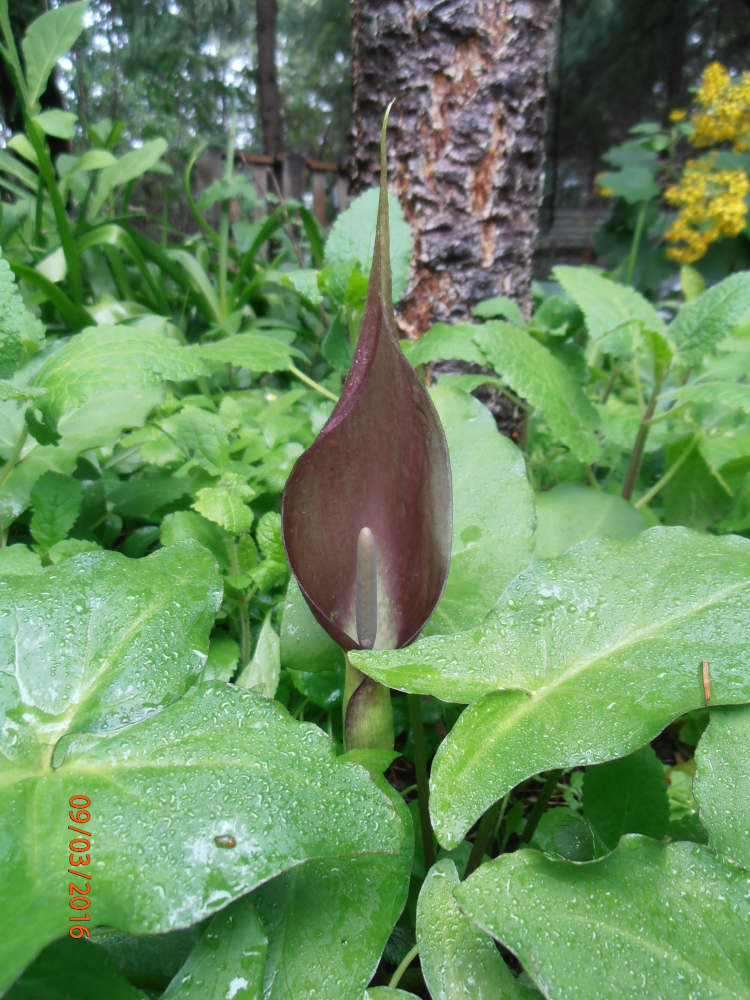
Beautiful deep purple spathes with white centers and purple spadices. Rare woodland species from the Balkans, listed as critically endangered on the Italian Red List. Best in part shade. Summer dormant.
—Arum cyrenaicum Arch 195.150. (20) ARUM-8. Packet: $2.50
10 grams: $10.00, 50 grams: $30.00
Click for photo »


Fresh seed stored moist and refrigerated for rapid germination.
Large rosy purplish spathes and purple spadices. Dark green arrowhead leaves delicately spotted. Woodland species from Libya. Rarely seen.
—Arum purpureospathum. (10) ARUM-20. Packet: $3.00
10 grams: $30.00
Fresh seed stored moist and refrigerated for rapid germination.
Click for photo »
Nice photo
Lots of nice photos
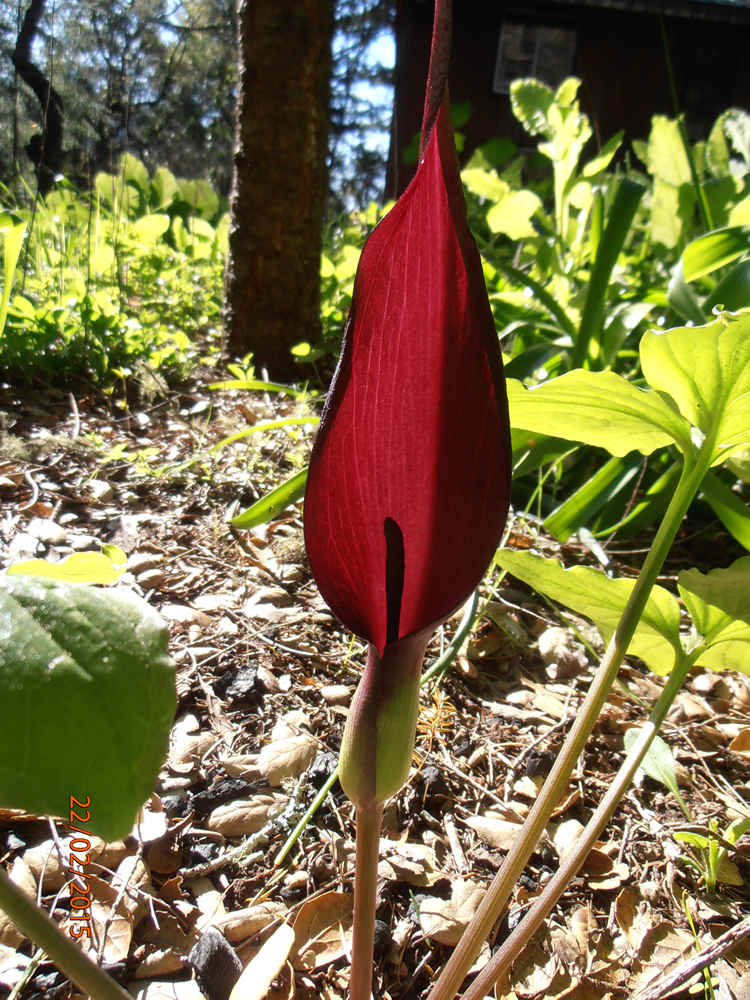
Striking large deep purple spathes to 12" long, held well above the leaves, in April and May, followed by orange berries. Dark green foot-long leaves emerge in fall. Endangered endemic, known only from a few sites in southwestern Crete, where it is protected. Zone 8. Likes a dry summer for dormancy.
ARUNCUS (a-RUN-kus)
ROSACEAE. 'GOAT'S BEARD'. Tall ornamental hardy perennials grown for their large, showy, Astilbe-like clusters of tiny white flowers. Best in moist shady places and by pools and streams. Good in the back border. Seeds germinate readily in 80 - 120 days at cool temperatures. Sow on the surface.
—Aruncus dioicus. (=sylvester) (1000) ARUN-3. Packet: $2.50
Gram: $5.00, 5 grams: $10.00
'GOAT'S BEARD'. Stately perennial to 7 feet, with plume-like panicles of ivory-white flowers in May to July, held above the large compound leaves. North Temperate regions. Seed viable 1 year.
ASCLEPIAS (as-KLEP-ee-as)
ASCLEPIADACEAE. 'MILKWEED', 'SILKWEED'. Some of the most striking of our N. American wildflowers, they are showy summer and fall blooming hardy perennials. Easily grown and making nice specimens in the border or wild garden. Attractive foliage and pods. Often grown to attract butterflies. Some are medicinal, used as spring greens or produce fine fiber. Some species germinate readily in as little as 8 days, up to 60 - 90 days, others need cold.
—Asclepias fascicularis. (50) ASCL-4. Packet: $2.50
'NARROW-LEAF MILKWEED'. Light pink to white flowers in clusters in June to September. Hardy perennial to 3 feet, with narrow leaves. W. U.S. Stands drought. Young leaves were eaten by Indians. Germinates in 2 - 3 weeks.
—Asclepias incarnata. (50) ASCL-6. Packet: $2.50
1/4 Ounce: $7.50, Ounce: $20.00, 1/4 Pound: $60.00
'SWAMP MILKWEED'. Rose-pink flowers in mid to late summer. Hardy perennial to 4 feet with fibrous roots. E. U.S. Zone 3. Germinates easily at warm temperatures, but a week of cold can help. Likes moist soil, but does fine in gardens. The buds were eaten in deer-broth soup or corn meal mush by the Indians, who also stored them for winter. Germinates in 2 weeks with stragglers up to 1 year. Light cold or fall sowing may give more even germination.
—Asclepias incarnata 'Ice Ballet'. (10) ASCL-6B. Packet: $2.50
White flowers in clusters in July to Sept. Hardy perennial to 3 feet, with narrow leaves. Zone 3. Said to be vanilla-scented. Prechill seed to germinate in 2 - 10 weeks.
—Asclepias speciosa. (50) ASCL-12. Packet: $2.50
1/4 Ounce: $9.50, Ounce: $30.00
'SHOWY MILKWEED'. Pink to purple flowers with long hoods, in clusters, from May to July. Hardy perennial to 2 1/2 feet. W. N. America. The first tender shoots have been cooked as a spring vegetable like asparagus. "The best of all wild greens."—J. M. Bates. Germinates in 1 - 4 weeks. The star-shaped pink flowers are loved by bees.
—Asclepias syriaca. (50) ASCL-14. Packet: $2.50
Ounce: $15.00, 1/4 pound: $50.00 BULK OUT OF STOCK - packets are still available
Click for photos »

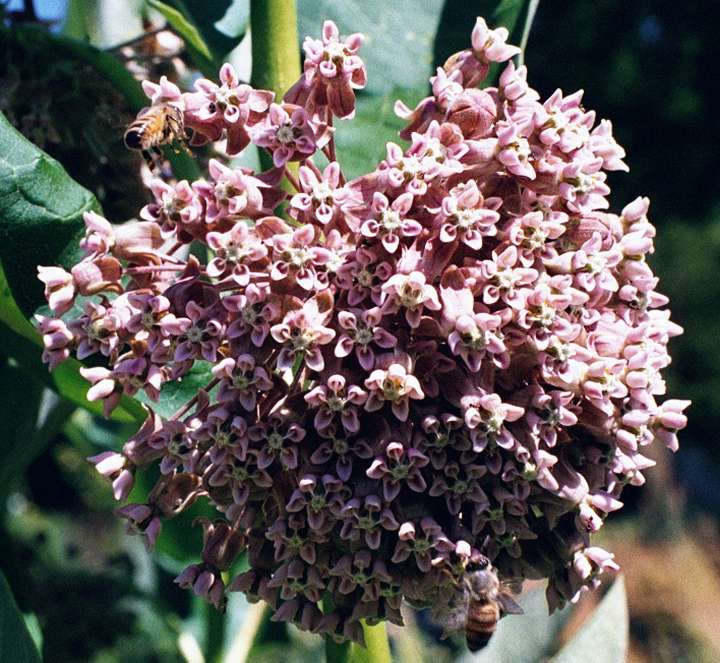
'COMMON MILKWEED'. Sweet scented lavender to purple flowers in dense umbels in mid summer. Hardy perennial to 5 feet. NE U.S. Zone 3. The seed and stem fibers have been used for textiles. The young shoots in spring are an excellent asparagus, the young green pods are eaten. The Sioux boiled them with their bison meat. The flowers are also eaten, and provided the Indians with a kind of sugar. The root was used as an anodyne. Germinates in 3 - 4 weeks warm, and is improved by GA-3.
—Asclepias tuberosa. (50) ASCL-15. Packet: $2.50
1/4 Ounce: $10.00, Ounce: $28.00, 1/4 pound: $90.00 NEW PRICE
'BUTTERFLY WEED', 'PLEURISY - ROOT'. Brilliant orange flowers in large clusters in mid summer. Hardy perennial to 3 feet from long horizontal roots. E. U.S. Zone 3. Excellent cut flowers. Highly attractive to many butterflies. Stands drought and dry soil. The tender shoots were eaten like asparagus, the flowers provided sugar, and the young pods were eaten. The medicinal root was boiled and eaten by various tribes. Germinates in 1 - 3 weeks.
—Asclepias tuberosa 'Gay Butterflies'. (25) ASCL-15G. Packet: $3.00
Gram: $8.00
Striking mix of brilliant orange-red, orange, and yellow flowers in dense clusters. Hardy perennial to 2 1/2 feet, with narrow leaves. An improved strain of the old favorite butterfly-weed. Choice! Attracts many butterflies. Germinates in 1 - 3 weeks.
"All substances are poisons; there is none which is not a poison. The right dose differentiates a poison and a remedy."—Paracelsus (1493 - 1541)
ASTER (A-ster)
COMPOS1TAE. Attractive herbaceous perennials with daisy-like flowers Worldwide distribution. They are among the best plants for borders and roadsides. The various species germinate in 1 - 6 weeks sown in spring and up to June and July for bloom the following year. Most do well in the garden, but preferences range from poor dry shallow soil in full sun, to deep moist soil and shade. Good fall bloom.
—Aster novae-belgii. (250) AST-70. Packet: $2.50
Purple 1" flowers on the whole plant in September and October. Hardy perennial to 4 - 7 feet. Zone 2.
ASTILBE (a-STIL-be)
SAXIFRAGACEAE. Asian and North American perennials for rich moist soil, sun or part shade. Sow on the surface of a fine soil. The plume-like sprays of flowers are good for cutting.
—Astilbe chinensis var. pumila. (250) ASTI-6P. Packet: $2.50
True dwarf to only 9 - 15" tall, with large, feathery pink flower-clusters in summer. Divided leaves. China. Zone 3. Surface sow to germinate in 2 - 3 weeks warm.
ASTRAGALUS (as-tra-GAL-us)
LEGUMINOSAE. The largest genus of vascular plants, some 2000 species nearly worldwide. Annuals, perennials and shrubs from a variety of habitats. They provide food, forage, gums, medicinals, cosmetics, and are soil builders, mineral indicators, etc.
—Astragalus glycyphyllos. (50) ASTR-22. Packet: $2.50
Pictures and info: http://www.naturespot.org.uk/species/wild-liquorice
'LICORICE SWEETVETCH'. Creamy to yellowish 1/2" flowers in dense clusters in summer, followed by dense clusters of curved pods. Sprawling perennial to 3 feet across. Eurasia. Zone 3. Good nitrogen-fixing pioneer species. Leaves have been used as tea. Soak, nick hard ones, germinates in 3 - 4 weeks. This lot dormant, and germinates over 1 - 6 months after nicking, a prechill might help.
"The Checkered Demon just smiled."—S. Clay Wilson
ASTRANTIA (as-TRAN-tee-a)
UMBELLIFERAE. 'MASTERWORT'. Ornamental hardy perennial herbs with palmately divided leaves, grown in borders.
—Astrantia major 'Primadonna'. (50) ASTA-16P. Packet: $2.50
Click for photo »
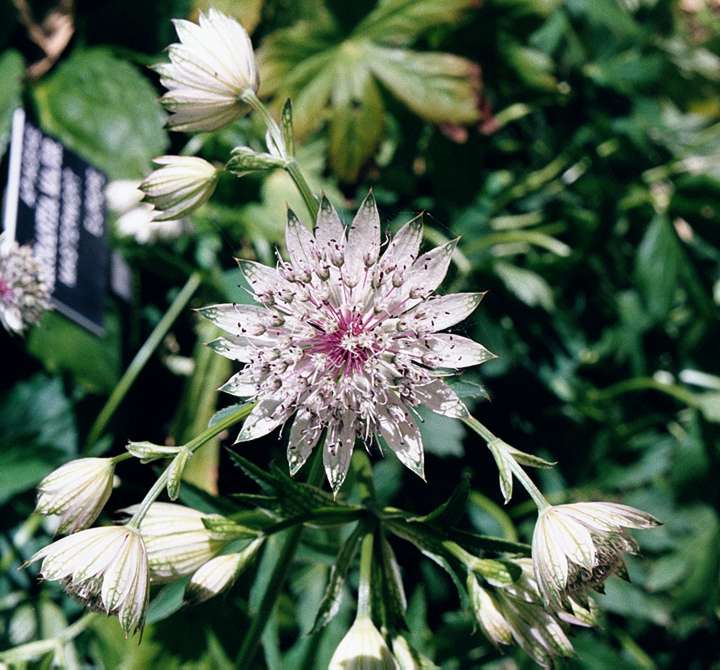
'GREAT MASTERWORT'. Large umbels with star-like bracts in varying shades of wine-red. Excellent for cut or dried flowers. Hardy perennial to 30", with attractive foliage. Bushy habit, good in borders, among shrubbery and at waterside. Europe. Zone 5.
NEW—Astrantia major 'Rose Symphony'. (50) ASTA-16R. Packet: $2.50
Large umbels in red and pink shades, June to August. Hardy perennial to 30". Excellent cut flowers. Prechill seed 4 - 8 weeks. A fine variety. Prechill seed 4 - 8 weeks.
ATHYRIUM (a-THEE-ree-um)
POLYPODIACEAE. Widely distributed ferns. Easily grown in rich damp soil and part shade. See Fern Spores for germination.
—Athyrium Filix-femina. ATHY-14. Packet: $2.50
'LADY FERN'. Graceful, easily grown fern with arching bright green 3 foot fronds. Hardy and forms nice clumps. N. Hemisphere. Zone 3.
ATROPA (AT-ro-pa or a-TRO-pa)
SOLANACEAE. 'BELLADONNA'. Several hardy perennials grown for ornament and medicine. Attractive bell-shaped flowers and shiny purple-black berries. Easily grown in any ordinary soil, doing very well in chalky, limestone soils. Named for Atropos, one of the three fates which severed the thread of life. Though rarely fatal to adults, children should be warned against them, and keep the berries picked. They become stately plants in a few years. Sow in early spring to germinate in 4 - 6 weeks. Germination is improved by cold treatment, GA-3, or soaking in vodka overnight (to leach out inhibitors).
—Atropa Belladonna. (100) ATRO-1. Packet: $2.50
Needs prechill, GA-3, or light and KNO3 to germinate.
—Atropa Belladonna GA-3. (100) ATRO-1G. Packet: $3.00
Gram: $7.50, 5 grams: $18.00
Pre-Primed with GA-3.
'BELLADONNA', 'DWALE'. Purple blue or purple-yellow nodding inch-long bells in June to September, followed by shiny purple-black 1/2" berries. Graceful hardy perennial to 3 - 6 feet, with large ovate 3 - 10" leaves and purple stems. Eurasia. Zone 5. An ancient, legendary and powerful herb with a long history of medical and magical use. The plant was said to take the form of a lovely enchantress, but dangerous to look upon. Macbeth poisoned an army of invading Danes by giving them wine laced with the herb. It was used since ancient times as a surgical anesthetic, against asthma, cardiac disease, etc., and is a major source of pharmaceuticals to this day. It is used to dilate the pupil for ocular examination, and Italian ladies formerly used this property by putting the juice in their eyes to increase their beauty, hence the name. Plant out of reach of children, and warn them against the berries. Germinates in 3 - 6 weeks at warm temperatures.
"The outside is bigger than the inside."—J.L.H.