UMBELLIFERAE. Mediterranean to central Asia.
—Cachrys alpina. (20) CACH-4. Packet: $2.50
Umbels of yellow flowers in July and August. Hardy perennial to 4 feet, with feathery foliage. Zone 5. Prechill seed.
CAJANUS (ka-JAN-us)
LEGMINOSAE. Two tropical species.
—Cajanus cajan. (30) CAJA-2. Packet: $2.00
Ounce: $5.00 BULK OUT OF STOCK - packets are still available
Click for photo »
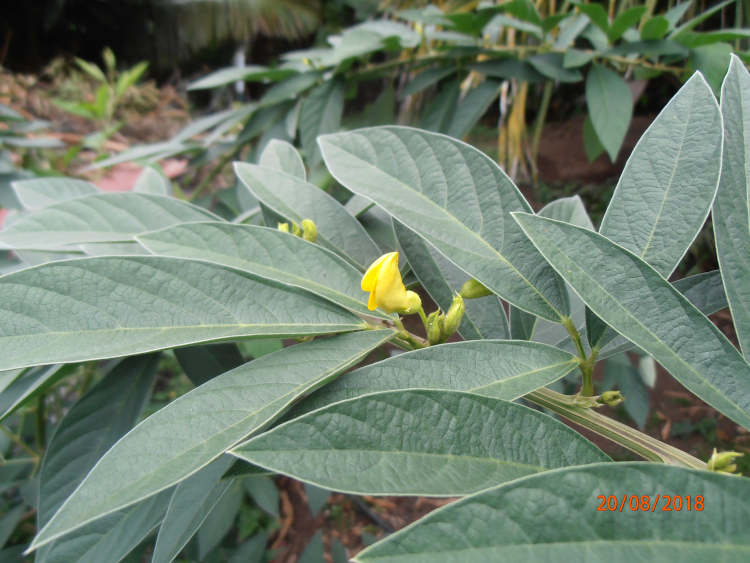
'PIGEON PEA'. Yellow flowers followed by edible pods and seeds. Short-lived perennial to 5 feet, thriving in sun and moist to dry poor soil. Africa. Zone 9 or 10. Widely grown in the tropics for the nutritious seed, young pods, and young leaves. Produces abundant food, forage, and builds soil. Germinates in 2 - 3 weeks. Some lots need nicking.
CALAMINTHA (ka-la-MIN-tha)
LABIATAE. Eurasian perennials grown for their tubular flowers or as flavoring and tea.
—Calamintha nepeta. (100) CALA-17. Packet: $2.50 OUT OF STOCK
Gram: $12.00 NEW PRICE BULK OUT OF STOCK
'CALAMINT'. Lilac flowers in whorls in July and August. Hardy perennial to 1 foot tall, with downy leaves. Creeping rootstocks. Europe. Zone 5. The whole plant has a sweet aromatic scent, and was made into a pleasant cordial tea. Was used medicinally and the ancients believed it had the power to drive away serpents. Germinates in 1 - 5 weeks warm. "We are beekeepers and native pollinator supporters, and this Calamintha is one of the very best bee plants we have experienced! Very long blooming period (usually 12 weeks or so!) and the bees go there from morning till sundown."—Alex Tuchman, Spikenard Farm, Virginia.
CALANDRINIA (ka-lan-DREE-nee-a)
PORTULACACEAE. Attractive, often trailing, somewhat succulent plants grown for their profusion of brilliant 3 - 7 petaled flowers. Easily grown from seed. Germinates in about 5 - 15 days. Best in sunny, dry, well-drained soil, and blooms best in hot sun. Blooms in about 15 weeks from seed.
—Calandrinia umbellata. (500) CALD-84. Packet: $2.50
Large, glowing, crimson-violet cup-shaped flowers in clusters from June to November. Mat-forming tender perennial forming tufts of grey-green narrow leaves to 3" tall, and flower stems to 6" tall. Peru and Chile. Zone 7. "Full exposure to sun, and light sandy soil, are needed to bring out the rare beauty of these plants."—L. H. Bailey. Germinates in 1 - 2 weeks.
CALCEOLARIA (kal-see-o-LAR-ee-a)
SCROPHULARIACEAE. Showy plants valued for their slipper-like flowers. Best in the cool greenhouse in finely sifted, peaty soil. Sow thinly on the surface and water by absorption from below.
—Calceolaria luxurians. (250) CALC-48. Packet: $3.00
Dozens of bright yellow pouched flowers in branched clusters to 18" tall. Large rosettes of crinkly leaves. From 11,200 feet elevation, streamside, Aconcagua, Argentina. Possible hardy to Zone 7. Surface sow to germinate in 1 - 8 weeks.
CALENDULA (ka-LEN-du-la)
COMPOSITAE. Showy hardy annuals and perennials with large yellow and orange daisies. Easily grown, thriving in the poorest soils and harsh conditions. Sow where they are to stand in early spring, or in July to September for winter flowering pot plants. Cool weather plants which should be sown in fall in California and the South. Self sows and good for naturalizing. Long-lasting cut flowers. Nearly everblooming in mild climates. Seed viable 8 - 10 years. Germinates in 1 - 3 weeks, best in the dark, so cover 1/4" deep. Cool temperatures best, and 1 week prechill helps some kinds.
Calendula officinalis Varieties:
'POT MARIGOLD'. Hardy annual to 1 - 2 feet. Cultivated since before 1573 for the showy flowers which are used in broths, soups, conserves and for coloring butter. Also had many medicinal uses, and was mentioned in herbals as early as Albertus Magnus' 13th century work. The petals were said to 'comfort the heart and spirits'. "No broths are well made without dried marigold."—Stevens, 1699. The fresh petals are colorful in salads. The single flowered varieties are closest to the wild ancestor, and the doubles produce an abundance of petals for the kitchen. Should be in every cook's garden.
—Calendula officinalis 'Pacific Beauty Mix'. (100) CALN-7PX. Packet: $2.00
Ounce: $6.00, 1/4 Pound: $10.00
Excellent cut-flower strain, with uniform long straight stems to 2 feet. Shades of apricot, creamy yellow, golden yellow, lemon yellow with dark eye, and deep orange with eye. Germinates in 1 - 3 weeks.
—Calendula officinalis 'Pot Marigold'. (100) CALN-7W. Packet: $2.50
10 grams: $7.50
'POT MARIGOLD', 'SOLIS SPONSA'. The wild form from Europe. Germinates in 1 - 5 weeks, sometimes part dormant, so 4 weeks prechill helps.
—Calendula officinalis 'Triangle Flashback'. (25) CALN-7TF. Packet: $2.50 OTC ORGANIC SEED
1/2 Ounce: $12.00
Striking fully double flowers with maroon petal-backs and faces in pastel pink shading to yellow in the center. Also called 'Zeolights'. Organically grown. Prechill 1 week.
"Mathematics has no existence on its own. It is merely an arbitrary code devised to describe physical observations or philosophical concepts."—Asimov.
CALLICARPA (kal-li-KAR-pa)
VERBENACEAE. Nice shrubs and trees with clustered small flowers followed by bright fruits. Mostly tropical, but some hardy to Zone 5, where they renew from the roots. Tender kinds are good in the greenhouse.
—Callicarpa americana. (100) CALI-4. Packet: $2.50
Click for photo »
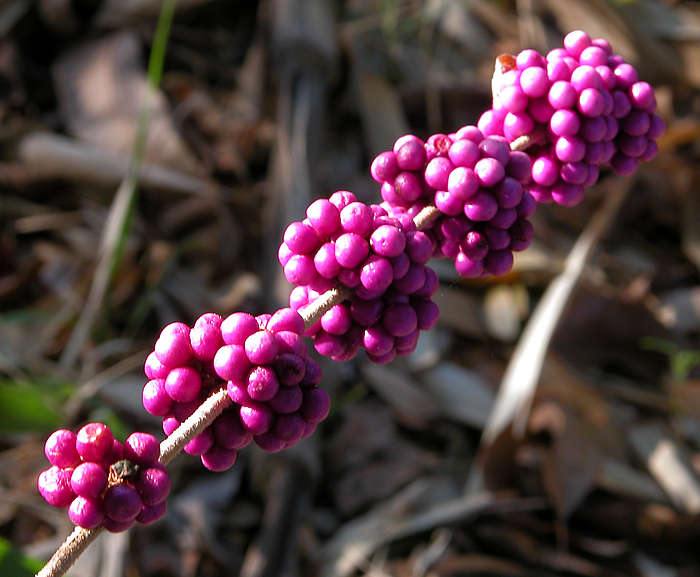
'FRENCH MULBERRY', 'BEAUTY BERRY'. Bluish white four-petaled flowers in dense clusters, with prominent stamens, May to July, followed by violet-blue berries. Attractive shrub to 6 feet, with 6" leaves. Virginia to Texas. Zone 6. Good ornamental for the South. Moist soil. Good deer browse. Prechill 12 weeks to germinate in 1 - 6 months.
—Callicarpa americana var. lactea. (100) CALI-4A. Packet: $2.50
'WHITE BEAUTY BERRY'. Very attractive form with abundant white berries loved by birds. To 6 - 8 feet, with slightly cascading branches. Blooms mid-spring. Choice and rarely seen. Prechill 12 weeks.
CALLISTEMON (ka-li-STE-mon)
MYRTACEAE. Among the showiest of Australian shrubs, with profuse bottlebrush-like flowers. Good landscaping material in California.
NEW—Callistemon citrinus. (1000) CALST-4. Packet: $2.50
5 grams: $7.50
'CRIMSON or LEMON BOTTLEBRUSH'. Large brilliant red bottlebrush flowers on a shrub to 10 - 25 feet, with narrow leaves and silky pinkish shoots. E. Australia. Zone 8. Leaves citrus-scented when crushed. Blooms most of the year and attracts hummingbirds. Tough and reliable. Germinates in 2 - 4 weeks.
CALOCHORTUS (kal-o-KOR-tus)
LILIACEAE. Attractive bulbous plants from western North America. The flowers of many are of extraordinary beauty. Best in light soil with good drainage, excessive moisture being detrimental. Most do well in pots. Cold desert species need cool (40 - 50°F) temperatures for germination—sowing at 70°F may be harmful.
—Calochortus luteus BK091028.1. (25) CALOC-70. Packet: $2.50
'GOLDEN MARIPOSA LILY'. Deep yellow cup-shaped 2" flowers in April to June, with variable red-brown markings. Bulb to 6 - 18", with narrow grassy leaves. Endemic to central California. Zone 9. Best in summer-dry areas. Bulbs edible, and were eaten by the Indians. Germinates at cold temperatures.
—Calochortus Tolmiei. (20) CALOC-80. Packet: $2.50
'PUSSY EARS'. White or cream inch-long bell-shaped fringed and fuzzy flowers, often tinged rose or purple. Bulb with narrow blue green leaves. W. US. Zone 5 or 6. Bulb edible. Germinates at cold temperatures.
"Information is not knowledge. Knowledge is not wisdom. Wisdom is not truth. Truth is not beauty. Beauty is not love. Love is not music. Music is the best."—Frank Zappa.
CALONYCTION (kal-o-NIK-tee-on)
CONVOLVULACEAE. Large twining half hardy perennials grown as annuals for their large and showy, fragrant, trumpet-shaped, night-blooming flowers. They are beautiful free-flowering vines, their night-scented blooms make them excellent for covering trellis work by summer porches and bedroom windows. Nick seed or soak overnight in warm water till swollen. Germinates in about 2 weeks. Sow early and plant out in May. Easy.
—Calonyction aculeatum. (=Ipomoea alba) (10) CALON-1. Packet: $2.00
Ounce: $6.00, Pound: $36.00
Click for photo »
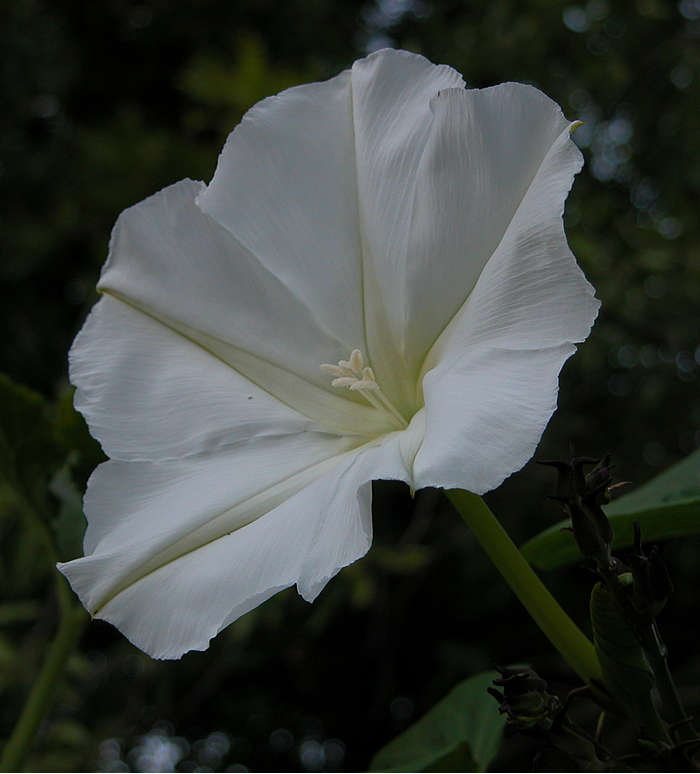
'GIANT MOONFLOWER'. Large, white, sweetly scented 3 - 6" wide trumpet shaped flowers which open rapidly in the evening, and sometimes stay open till noon the next day. Fast growing twiner to 10 - 20 feet, with handsome heart-shaped leaves. Tropical America. In Panama, the leaves and calyces are eaten as a vegetable, as are the young seeds.
CALOTHAMNUS (kal-o-THAM-nus)
MYRTACEAE. Showy Australian shrubs with red flowers and narrow leaves. Easily grown in warm regions or in the cool greenhouse. Not particular as to soil. Seed germinates in 10 - 30 days.
—Calothamnus quadrifidus. (50) CALH-20. Packet: $2.50
http://www.anpsa.org.au/c-qua.html
https://www.anbg.gov.au/gnp/interns-2011/calothamnus-quadrifidus.html
'NET BUSH'. Bright red stamens in one-sided bottlebrush spikes to 8" long. Showy shrub to 8 feet, with needle-like leaves. W. Australia. Zone 9. Very adaptable. Surface sow, germinates in 1 - 28 weeks.
—Calothamnus rupestris. (50) CALH-24. Packet: $2.50
'CLIFF NET BRUSH'. Bright red flowers with long stamens tipped golden-yellow. Low shrub to 5 feet, with dense, needle-like foliage. W. Australia. Zone 9. Good in the greenhouse. Surface sow to germinate over 1 - 10 months.
CALOTROPIS (kal-o-TRO-pis)
ASCLEPIADACEAE. Showy-flowered shrubs & trees of Africa & Asia, grown in warm regions and in the greenhouse. Easy in well drained soil. In California & Florida, they may be grown outdoors, and they stand dry coastal areas and salt spray.
NEW—Calotropis procera. (25) CALO-19. Packet: $2.50
5 grams: $9.00 BULK OUT OF STOCK - packets are still available
Click for photo »
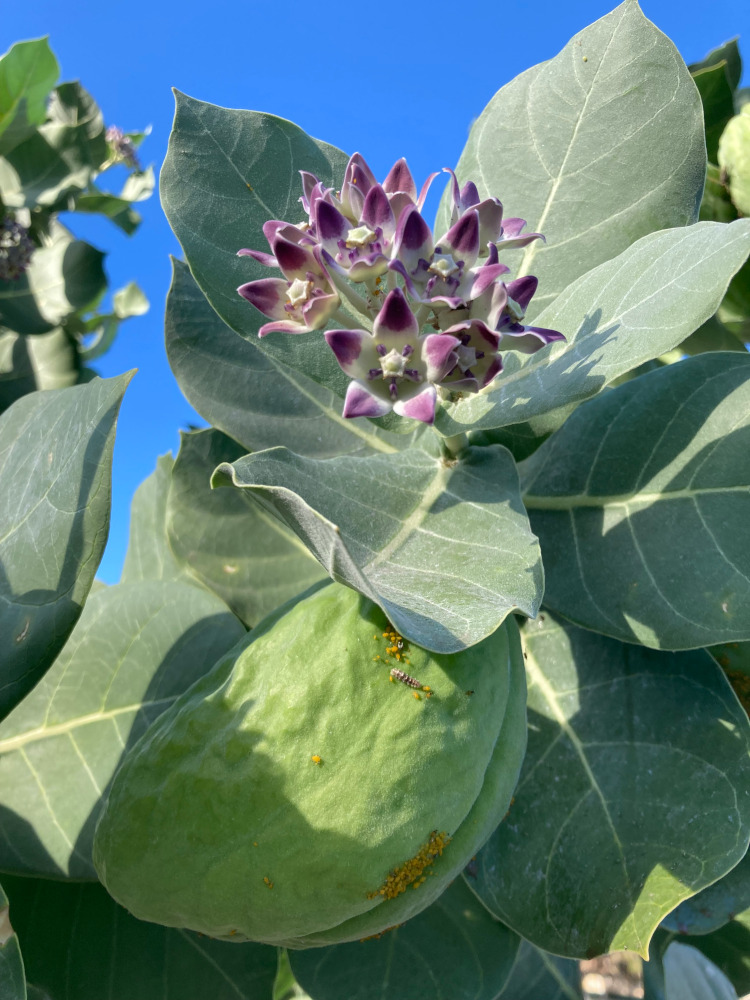
'CROWN FLOWER', 'SWALLOW-WORT', 'APPLE OF SODOM'. Clustered white or lavender inch-wide flowers with purple-tipped petals. Shrub or tree to 6 - 18 feet, with striking, large, rubbery, light green, foot-long leaves. Large, spongy, grapefruit-sized fruits, filled with abundant silky floss. India to Africa. It has a toxic milky sap, and various parts are used for dozens of medicinal purposes. Contains a number of cardioactive substances and has been used in preparing arrow poisons. Yields a glossy, flax-like fiber which is very strong and used for bow-strings and fishing lines. Seed floss used for pillows. Insecticidal and vermifugal. Said to be one of the secret ingredients used in producing the 'Damascus Steel' of sword fame. Germinates irregularly, from 3 weeks to 7 months warm. Best in the dark, at 86° F.
CALYCANTHUS (ka-lee-KAN-thus)
CALYCANTHACEAE. Easily grown aromatic shrubs from North America and east Asia. Valued for their fragrant summer and fall flowers. Best in well-drained somewhat rich soil in sun or shade. Sow in spring.
—Calycanthus floridus. (25) CALY-4. Packet: $2.50
Ounce: $7.50, 1/4 Pound: $15.00 BULK OUT OF STOCK - packets are still available
'CAROLINA ALLSPICE'. Fragrant, many-petaled dark reddish brown 2" flowers. Deciduous shrub to 3 - 10 feet with 5" leaves. Virginia to Florida. The hardiest, to Zone 5. Much valued for the fragrant flowers. Bark was used as a cinnamon substitute. Nick seed to germinate in 3 - 6 weeks warm.
CAMASSIA (ka-MAS-ee-a)
LILIACEAE. North and South American hardy bulbs with blue and white flowers in graceful racemes, and grass-like leaves. Best in rich soil kept moist in spring. Needs cool temperatures to germinate, and may be slow otherwise.
—Camassia angusta. (25) CAMA-4. Packet: $3.00
'PRAIRIE CAMAS'. Starry purple flowers on spikes to 2 1/2 feet tall in spring. Rosettes of strap-like leaves. Central US prairies, endangered in some areas. Zone 4. Bulbs edible. Prechill seed 8 - 12 weeks. For more seeds and plants grown by plant-explorer Ben Kamm, including many Andean rarities, see his website at www.sacredsucculents.com
—Camassia Leichtlinii. (25) CAMA-15. Packet: $2.50
5 grams: $10.00
'GREAT CAMAS'. Starry white six-petaled inch-wide flowers in tall spikes to 3 - 4 feet, May and June. Hardy bulb with strap-like 2 foot leaves. B.C. to N. California. Moist areas. Zone 3. Bulbs prized by Indians as food, raw or cooked. Prechill 8 weeks. Keep cool after germination.
—Camassia Leichtlinii Pink. (50) CAMA-15P. Packet: $2.50
A nice pink form. Prechill 8 weeks.
—Camassia Leichtlinii Mix. (25) CAMA-15X. Packet: $2.50
Mixed blue and purple shades. Prechill 8 weeks.
—Camassia Quamash. (25) CAMA-20. Packet: $2.50
Click for photos »
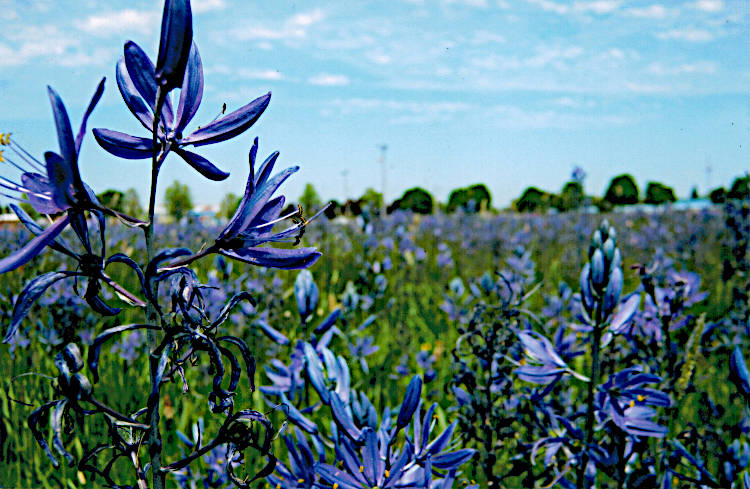
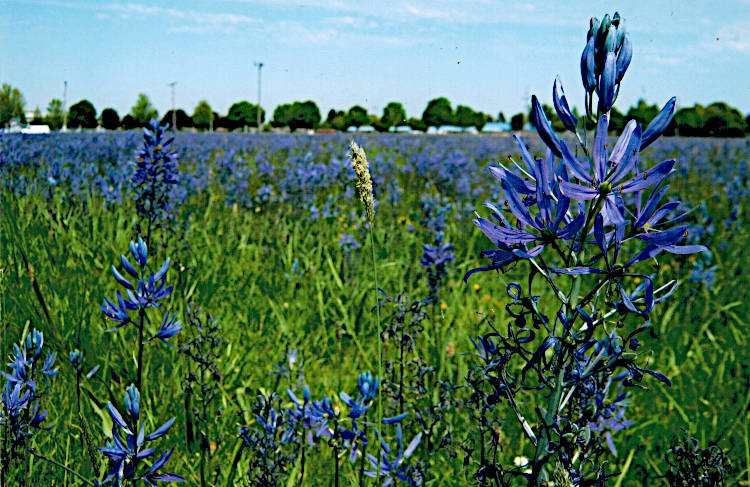
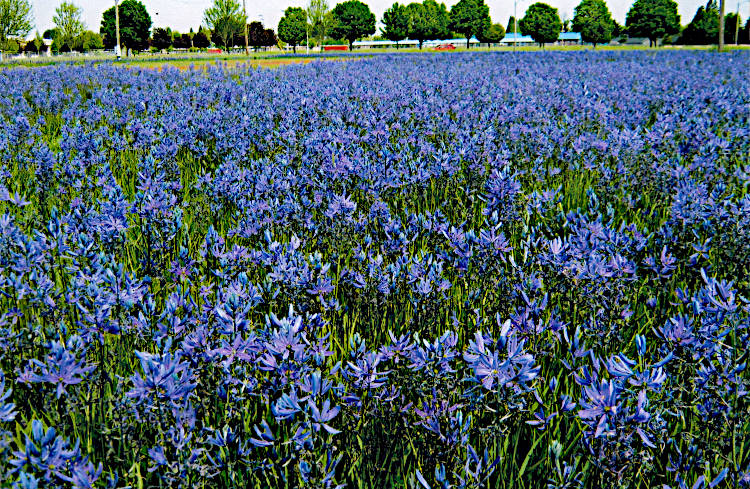
'CAMAS' 'QUAMASH'. Dark blue to white inch long flowers in spikes. Hardy bulb to 3 feet. Pacific Northwest. Zone 4. The bulbs were an important part of the diet of the Indians, and it was gathered in large quantities and eaten roasted or boiled. The cooking is said to develop the sweetness of the bulb. Prechill 8 weeks to germinate in 1 - 4 weeks.
—Camassia Quamash Mix. (50) CAMA-20X. Packet: $2.50
A nice mix of lavender, light blue, white, and blue and white striped.
—Camassia scilloides. (25) CAMA-24. Packet: $3.00
'EASTERN CAMAS', 'WILD HYACINTH'. White to pale violet inch-wide starry flowers on stems to 2 1/2 feet, above a rosette of bright green leaves. E. N. America. Zone 4. Bulbs eaten raw or cooked by many tribes. Prechill seed 8 -12 weeks. For more seeds and plants grown by plant-explorer Ben Kamm, including many Andean rarities, see his website at www.sacredsucculents.com
CAMPANULA (kam-PAN-you-la or kam-pa-NU-la)
CAMPANULACEAE. 'BELLFLOWER', 'BLUEBELL', 'HAREBELL'. Many annual, biennial and perennial herbs prized for their showy, bell-shaped flowers. Adapted to the flower garden, rock garden and pot culture. The cascading species are especially good in hanging baskets. Flower garden kinds do best in deep moist loam, and rock garden kinds are best in sandy humus with a little lime. Part shade is beneficial in hot summer areas, and a light straw mulch in cold winter areas. Sow annuals early, in February to March, and plant out in May, biennials and perennials from June to September. Sow on the surface or barely cover as light is beneficial to some. Most germinate in 5 - 30 days, some up to 74 days. Cool temperatures (50 - 60°F) help some, and a few will hold over a year if sown in warm summer weather. Give flats mid-day shade and avoid overwatering. Liquid manure while flowering is helpful. They make long lasting cut flowers. Seed viable 4 - 10 years.
—Campanula cochlearifolia. (500) CAMP-24. Packet: $3.00
Little, nodding, 1/2" blue bells held on delicate stems over the grassy, low growing 2 - 8" plant. Hardy perennial. Leaves begin kidney-shaped, and become grass-like with maturity. Mountains of Europe. Zone 3. An excellent pot or rock garden plant, quickly forming a dense mat. My favorite. Prechill 8 - 12 weeks or use GA-3 to germinate in 1 - 3 weeks.
—Campanula Medium Single Mixed. (1000) CAMP-1X. Packet: $2.50
10 grams: $7.50 (about 3700 seeds per gram), 50 grams: $15.00
Click for photos »
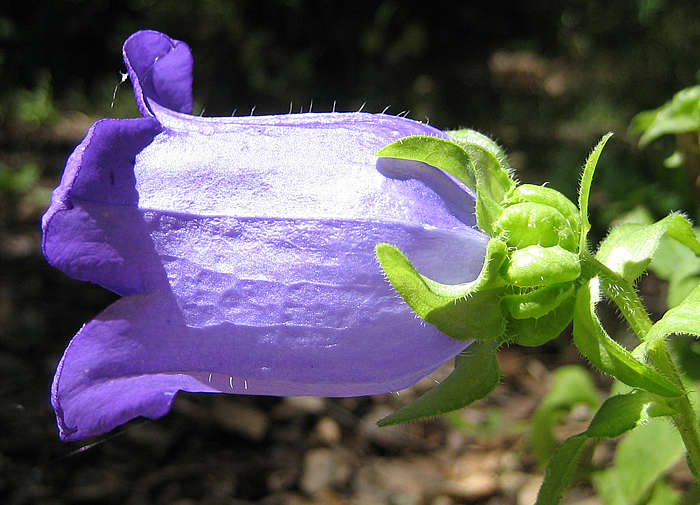
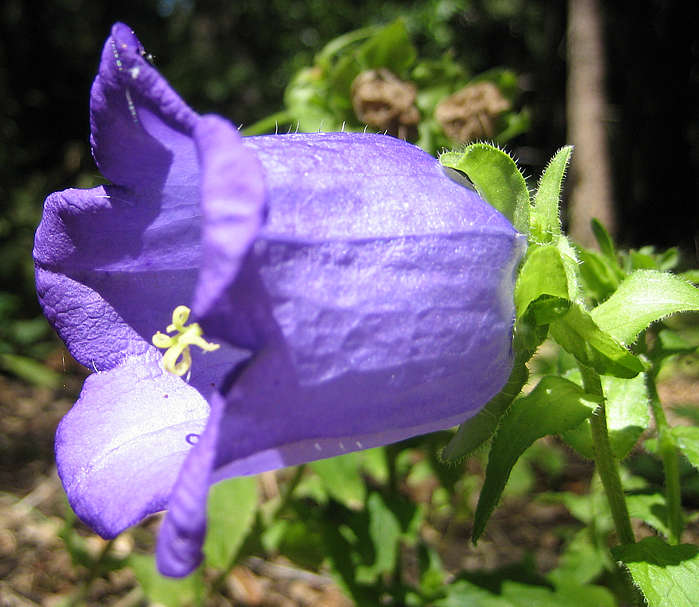
'CANTERBURY BELLS'. Large single flowers in mixed shades of white, blue, rose, and lilac, in loose racemes on stems to 2 - 3 feet or more; excellent for late spring and summer bloom. Zone 5. Beautiful and easily grown garden plants, these sturdy flowers can be sown in late summer for bloom in spring, or started in March for bloom the same season. If the flowers are cut they may bloom again the following spring. The beautiful bell-shaped flowers are about 2" long and an inch wide. They last well when cut. Surface sow, needs light, germinates in 1 - 3 weeks.
—Campanula patula. (1000) CAMP-64. Packet: $2.50
Large purple-blue inch-wide flowers in June and July. Hardy biennial to 16". Central Europe. Zone 4. Germinates in 1 - 2 weeks.
—Campanula persicifolia. (1000) CAMP-71. Packet: $2.50
'PEACHLEAF' or 'WILLOW BELLFLOWER'. Large blue 1 1/2 - 2" flowers. Hardy perennial to 3 feet, with narrow 4 - 8" leaves. Europe. Hardy to Zone 3. Very pretty. Once used as food in England. "One of the best of all perennial bellflowers."—L.H. Bailey. Germinates in 2 - 3 weeks warm.
—Campanula persicifolia 'Telham Beauty'. (1000) CAMP-71T. Packet: $2.50
Fine china-blue variety. Due to chromosome doubling, this is larger and more vigorous.
—Campanula punctata ssp. hondoensis. (1000) CAMP-85H. Packet: $2.50
Click for photo »
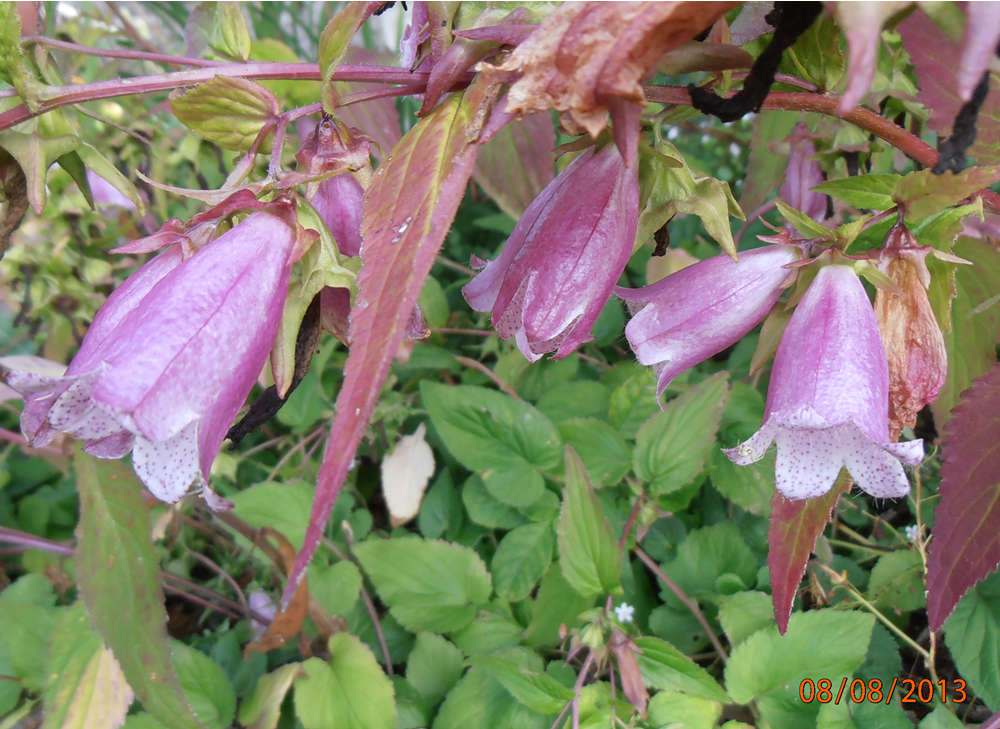
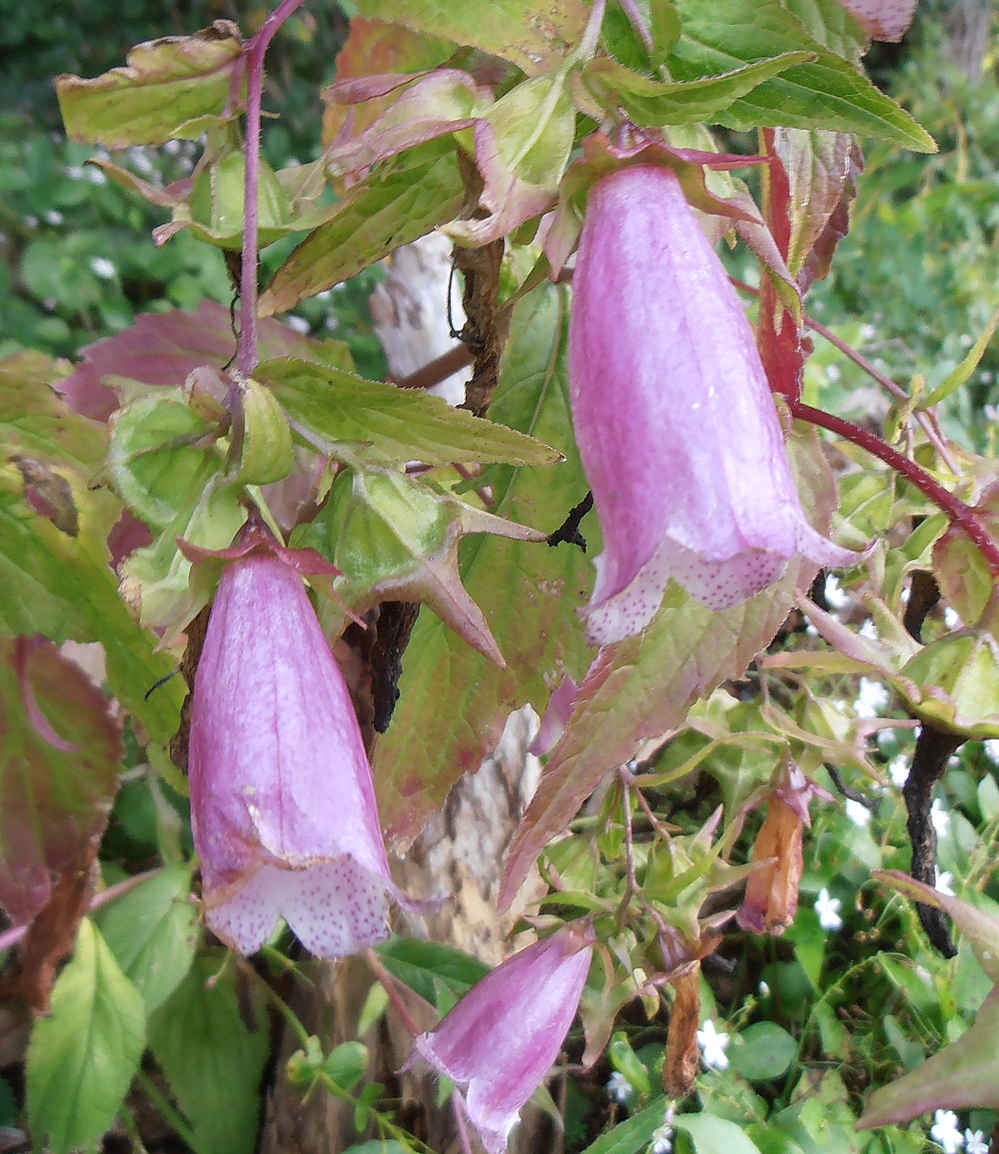
Larger than the Siberian form, with purple to creamy 2 - 3" speckled pendulous bells produced abundantly in summer. Hardy perennial to 1 - 2 feet. Japan. Zone 4. The flowers are eaten raw in salads, and the leaves as a potherb. Germinates in a week. For more seeds and plants grown by plant-explorer Ben Kamm, including many Andean rarities, see his website at www.sacredsucculents.com
—Campanula punctata rubriflora. (100) CAMP-85R. Packet: $2.50
Large, narrow, cream to purple 2" bells with intense crimson spots. Choice! Germinates in 2 - 3 weeks.
—Campanula pyramidalis alba. (1000) CAMP-87A. Packet: $2.50
'WHITE CHIMNEY BELLFLOWER'. This is the spectacular white-flowered form, with 4 foot tall leafy pyramidal clusters of inch-long flowers. "Stunning in arrangements. My favorite."—S. Calkins.
—Campanula Rapunculus. (3000) CAMP-96. Packet: $2.50
Gram: $7.50 BULK OUT OF STOCK - packets are still available
Click for photo »
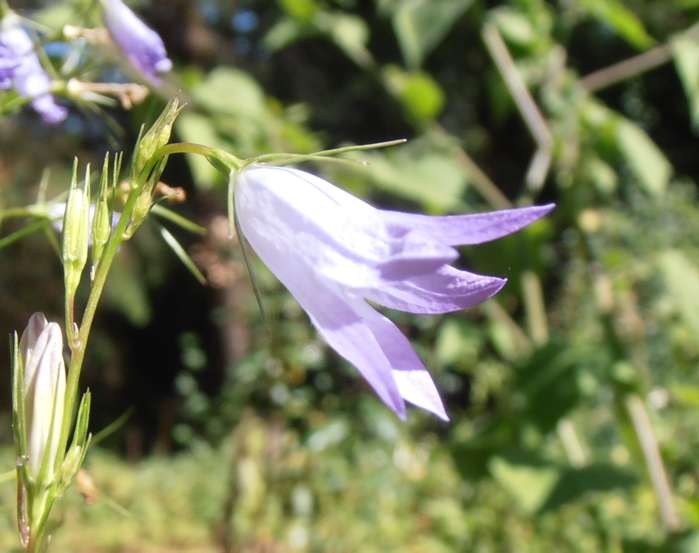
'RAPUNZEL', 'RAMPION'. Sky blue 3/4" bells in summer. Hardy biennial to 3 feet. Eurasia. Zone 4. The young roots are eaten raw or cooked, and the leaves and flowers are good in salads. This is the famous plant featured in the fairy tale 'Rapunzel', involving the theft of rapunzels from a witch's garden. There were formerly cultivated varieties with large roots, but these are extinct, and an interesting project would be reselection. Germinates in a week.
—Campanula rotundifolia. (500) CAMP-99. Packet: $2.50
'BLUE-BELLS-OF-SCOTLAND', 'HAREBELL'. Large, deep lavender, inch-long flowers on slender stalks. Dainty hardy perennial to 12", with round root-leaves in spring. Eurasia. Hardy to Zone 2. The true 'bluebell' of literature. Germinates in 1 - 4 weeks.
—Campanula sarmatica. (100) CAMP-100. Packet: $2.50
Light blue inch-long flowers with flaring petals, in spikes in June and July. Hardy perennial to 16", with grey-green felty foliage. Caucasus. Zone 4. Germinates in a week.
CAMPSIS (KAMP-sis)
BIGNONIACEAE. 'TRUMPET VINE'. Striking ornamentals with brilliant clusters of showy scarlet or orange flowers. Fast growing robust vining shrubs climbing by aerial roots. Easily grown in sunny fertile places with something to climb on. Good erosion control and wildlife food. Some are root hardy to minus 30°F. Germinates in 1 - 8 months warm, and is often improved by 4 - 8 weeks cold.
—Campsis radicans 'Yellow'. (50) CAM-4Y. Packet: $2.50
'YELLOW TRUMPET VINE'. Large yellow trumpet flowers in clusters in summer. Hardy deciduous climbing shrub to 30 feet, with bold dark green foliage. E. U.S. Zone 4.
CANAVALIA (ka-na-VA-lee-a)
LEGUMINOSAE. Ornamental tropical beans with often showy pea-like flowers and trifoliate leaves. Large pods. Good in warm regions. Long season.
NEW—Canavalia ensiformis. (10) CANV-8. Packet: $3.50
1/4 pound: $20.00 (about 90 seed)
'JACK BEAN'. Robust annual to 3 - 6 feet, with inch-long pink-purple flowers followed by huge foot-long pods which resemble giant green beans, filled with large white seed. Tropical America. Tender young pods eaten like green beans, picked before the seed swell (half grown) and cooked—toxic raw. Young shoots eaten cooked, and fully grown green seeds eaten cooked, but mature seeds are toxic unless boiled repeatedly and peeled. Highly productive, yielding 800 - 4600 kilos seed per hectare, and 40 - 50 metric tons green material, used for compost or stock feed. Germinates in 1 - 3 weeks.
CANNA (KAN-na)
CANNACEAE. Showy tropicals valued for their brilliant flowers, stately habit and bold foliage. Easy in a deep, warm, rich, moist soil. Water and fertilize freely. Lift roots in fall after frost. Start early and plant out after all danger of frost. The hard seed are very long lived, having germinated when 600 years old, found in a pre-Columbian rattle. Nick and soak seed till swollen, and keep warm, to germinate in 1 - 8 weeks.
—Canna edulis. (=Canna indica Anchiras) (10) CANA-8. Packet: $2.50
Info on C. edulis
Photo
'ACHIRA', 'QUEENSLAND ARROWROOT'. Brilliant red narrow-petaled 2 1/2" flowers followed by fuzzy red seedpods. Large tropical perennial to 4 feet or more, with striking purple stems and large banana-like leaves. Tropical America. Zone 8. The large rhizomes are baked and eaten, and made into starch. The young shoots and immature seeds also eaten.
"Having obtained the difficult-to-obtain, free, and endowed human body, it would be a cause of regret to fritter life away."—Tantric Precept.
CARAGANA (ka-ra-GA-na)
LEGUMINOSAE. Hardy ornamental shrubs from Central Asia, valued for their showy flowers. Very hardy and adapted to harsh conditions, sandy alkaline soil, etc. Good for wildlife habitat, erosion control, riparian restoration, windbreaks, etc. Soak seed overnight. Cold treatment helps some kinds.
—Caragana korshinskii. (25) CARA-26. Packet: $3.00
1/4 Ounce: $7.50, Ounce: $15.00
'KORSHINSK PEASHRUB'. Yellow 3/4" flowers in May and June. Shrub or small tree to 3 - 12 feet, with pinnate leaves and attractive red pods. Sand dunes of Mongolia. Zone 2. Good for dune stabilization in cold dry deserts, improving the soil and providing forage. Germinates in 1 - 2 weeks warm.
—Caragana microphylla. (25) CARA-28. Packet: $2.50
Covered with 1" yellow flowers in clusters in spring. Very hardy shrub to 8 feet or so, with beautiful grey-green foliage of tiny leaflets. Siberia. Zone 3. "It is the only one that seems to resist spider mites out here in the Midwest."—Bertrand. Soak, nick hard ones, to germinate in 1 - 2 weeks warm.
CARDAMINE (kar-DA-mee-nay)
CRUCIFERAE. Annuals, biennials, and perennials with white to purple flowers. Most are dainty little plants and are easily grown. Excellent for moist shady places and heavy soil where other plants will not grow. Germination variable.
—Cardamine pratensis. (100) CARDA-64. Packet: $2.50
'CUCKOO FLOWER', 'LADY'S SMOCK', 'SPINKS'. Delicate white to pink or lilac 1/2" flowers in clusters in early spring. Hardy perennial to 12 - 20", with pinnate, cress-like leaves. North Hemisphere. Zone 3. The leaves and flowers make a piquant cress, good in salads or on sandwiches. Give seed 4 - 8 weeks prechill to germinate in 1 - 2 weeks.
CARISSA (ka-RIS-a)
APOCYNACEAE. 'HEDGE THORN'. Evergreen spiny shrubs, densely branched. Grown for hedges and some for edible fruits. Most soils suitable. Good in coastal gardens. Blooms best in full sun but will stand considerable shade. Stands only a few degrees of frost; best in California and the South.
—Carissa grandiflora. (20) CARIS-10. Packet: $2.50
5 Grams: $20.00 (about 400 seed)
'AMANTUNGULA'. White, scented flowers followed by red edible fruits. Attractive dense evergreen shrub to 3 - 13 feet. South Africa. Ideal for difficult coastal gardens. Germinates in 2 - 4 weeks.
CARLINA (kar-LEE-na)
COMPOSITAE. Stunning thistle tribe plants valued in the border or rock garden and for dried flowers. Best in not too rich soil. Sow on the surface; seed needs light, germinates in 1 - 3 weeks.
—Carlina acaulis ssp. simplex. (50) CARL-2S. Packet: $3.00
Huge white to reddish thistle-like head to 5" across on short stems to 12", August to September, borne singly in the center of a rosette of spiny glossy leaves. Very dwarf hardy perennial. Europe. Zone 3. Common in the Alps, the flower heads are striking and much valued in dried arrangements. Once eaten like artichokes. Some forms stemless. Germinates in 1 - 3 weeks.
CARTHAMUS (KAR-tham-us)
COMPOSITAE. Yellow, purple or white flowered annuals grown in the border or wild garden. They make nice clumps and are good in heavy soil and full sun. Drought resistant. Easy from seed sown in early spring where they are to flower. Cover 1/4", germinates in 3 - 18 days depending on temperature. Thin to 6" apart. Flowers in about 12 weeks.
—Carthamus tinctorius. (50) CART-3. Packet: $1.50
1/4 Pound: $5.00, Pound: $16.00 BULK OUT OF STOCK - packets are still available
'SAFFLOWER', 'FALSE SAFFRON'. Bright orange-yellow flowers with leafy bracts, on a thistle-like annual to 1 - 4 feet. Asia. Makes durable cut flowers, either fresh or dried. Ornamental and useful, it is widely grown for the seed oil used in cooking. The dried flowers are used like true saffron to color food, dye cloth, especially silks, and are powdered as a rouge-like cosmetic. It produces shades of pink, scarlet, purple, violet, etc. Needs cool temperatures (50 - 65°F) to germinate in 1 - 2 weeks. Warmth fatal.
CASSIA (KASS-ee-a)
LEGUMINOSAE. Showy herbs, shrubs and trees with pinnate leaves and large clusters of regular (not pea-like) flowers. A large genus from the tropics and temperate zones, with many highly ornamental species grown for their showy bloom and finely cut foliage. Prefers full sun, sandy loam and warm areas. The herbaceous species are hardy in the North, the woody kinds in warm areas or the greenhouse. Hard shelled seed - nick and soak to germinate in 1 - 12 weeks. Keep warm. The seed is very long lived; 158 years has been recorded.
—Cassia alata. (25) CASS-10. Packet: $2.50
Ounce: $7.50, 1/4 Pound: $20.00
'CANDLE-BUSH', 'KING OF THE FOREST'. Brilliant yellow 1 1/2" wide 5-petaled fragrant flowers in 4 - 12" spikes. Huge dark green, glossy, pinnate leaves up to 3 feet long. Interesting winged pods. Shrub to 3 - 15 feet. Tropics. Cut back after flowering. Fast growing and short-lived. The leaves are used throughout the Tropics for skin ailments, due to their chrysophanic acid content. The bark is used for tattooing in Africa. Zone 6. Soak, nick hard ones, to germinate in 1 - 4 weeks or so.
—Cassia marilandica. (50) CASS-210. Packet: $2.50
Ounce: $7.50, 1/4 pound: $20.00
'WILD SENNA'. Bright yellow, wide-open flowers in dense clusters covering the plant in July to September. Hardy perennial to 3 - 5 feet, with attractive light green pinnate foliage. New England and southward. Zone 4. Likes wet soil. Sow in early spring with heat. Protect with a straw mulch in severe climates. A fine native perennial. Used medicinally by the Indians and settlers, especially the Shakers.
CASUARINA (kas-u-a-REE-na)
CASUARINACEAE. Odd, leafless, evergreen hardwood trees of striking appearance. The thin, leafless, jointed branches resemble pine needles at a distance, horsetails close up. Male flowers in spikes, females in heads forming dry cones. Remarkable for their fast growth, tolerating dry or wet, brackish and alkaline soils, excellent by the seaside to hold sand dunes, and in desert areas. Long lived, and produce hard, durable wood with attractive grain, and quick burning firewood. Hardy to 15°F, excellent street trees in California and the South. Easy from seed, which is long-lived, 12 years or more. Germinates in 1 - 3 months. These peculiar trees are not closely related to any other plants.
—Casuarina equisetifolia. (1000) CASU-5. Packet: $2.50
'AUSTRALIAN PINE', 'HORSETAIL TREE'. Fast-growing tree to 60 feet, with weeping grey-green foliage and 1" cones. Australia. Zone 9. Stands drought down to 8" rain per year, and stands salt spray and is a good dune stabilizer. Nitrogen-fixing. The hard wood is used for tools, and burns with great heat, "Called the best firewood in the world."—National Academy of Sciences. Germinates in a week.
CATALPA (ka-TAL-pa)
BIGNONIACEAE. Ornamental trees grown for their magnificent pyramidal clusters of showy, foxglove-like flowers. Easily grown deciduous trees, valued for shade and avenue, and for the durable wood, used for fenceposts. Name comes from the Cherokee name for the tree. Easy from seed.
—Catalpa ovata. (50) CATL-18. Packet: $2.50
'CHINESE CATALPA', 'CHIO-CH'IU' (Chinese name). Large clusters of fragrant small yellow 3/4" bells marked with orange, red and purple. June. Ovate or three-lobed 10" leaves. Tree to 30 feet. China. Quite hardy. Germinates in 1 - 2 weeks.
CATANANCHE (kat-a-NAN-she)
COMPOSITAE. Pretty annuals and perennials with blue or yellow long-stalked flowers which are good for cutting, and can be dried for everlastings. Good in any ordinary soil.
—Catananche caerulea. (50) CATA-12. Packet: $4.00
'BLUE CUPID'S DART'. Showy lavender-blue flowers to 2" across from June to August. Hardy perennial to 2 feet, with downy narrow leaves. South Europe. Zone 4. The common name refers to the ancient use of the plant in love-philters. Start in early spring for bloom the first year. Space 1 foot apart. Germinates in 1 - 4 weeks.