CONVOLVULACEAE. Showy, easily grown, mostly annual tropical twiners. Treat like morning glory. Now generally classed in Mina and Ipomoea.
—Quamoclit X Sloteri. (10) QUAM-12. Packet: $2.50 OUT OF STOCK
10 grams: $6.00, 25 grams: $10.00 (about 40 seeds per gram) OUT OF STOCK
'CARDINAL CLIMBER'. Intense cardinal-red 2" long flowers with white throats. Hardy annual with divided leaves. Hybrid between Quamoclit coccinea and Q. pennata. Striking. Germinates in 1 - 4 weeks.
RABIEA (ra-BEE-a)
AIZOACEAE. South African succulents.
—Rabiea albipuncta. RABI-6. Packet: $4.00
Inch-wide yellow flowers with red stripes on the petals. Small succulent with thick green leaves spotted white. S. Africa. Zone 8 or 9.
RATIBIDA (ra-TEE-bee-da)
COMPOSITAE. 'PRAIRIE CONEFLOWER' Hardy perennial North American wildflowers grown for their large, striking, showy yellow to purple flowers. Sow in March and April for possible bloom the first year. Space 1 - 2 feet. Easy from seed in 1 - 3 weeks.
—Ratibida columnifera 'Red-Yellow'. (1000) RATI-6RY. Packet: $2.00
Ounce: $6.00, 1/4 Pound: $18.00 BULK OUT OF STOCK - packets are still available
'MEXICAN HAT'. Bright flowers with drooping petals vary from red edged and tipped yellow, to pure yellow. Column-like center. Hardy perennial to 3 feet, with narrow divided foliage, giving a good show in summer. Great Plains, Canada to México. Zone 4. Germinates in about a week, The leaves and flower-heads were used as a tea by Dakota Indians.
RHODIOLA (ro-dee-O-la)
CRASSULACEAE. Succulent perennials much like Sedum. Easily grown in well-drained soils. Hardy.
—Rhodiola rosea. (100) RHDI-21. Packet: $3.00
1/4 gram: $25.00, Gram: $54.00, 5 grams: $200.00
'ROSE-ROOT'. Dense clusters of yellow flowers in May and June. Very hardy perennial to 10", with crowded succulent grey-green leaves, often tinged red at the base. Northern regions. Zone 1. The leaves have been eaten in salads, steamed, or pickled. The rose-scented root is a valuable medicine, being adaptogenic like ginseng, increasing strength, endurance, learning, memory, is cardioprotective, anti-carcinogenic, and is used for a wide variety of conditions. For a good overview, see Herbalgram No. 56, 2002. Prechill 4 weeks or give GA-3 at 200 to 500ppm to germinate in 1 - 3 weeks.
RHUS (RUS)
ANACARDIACEAE. 'SUMAC'. Widely distributed and easily grown shrubs, trees and woody vines with small flowers and attractive, often pinnate foliage, often brilliant in fall, and many with colorful fruit. Thrives in any garden soil. Good wildlife habitat and erosion control. Seed of most have hard seed-coats and nicking or hot water treatment helps, followed by cold treatment for some. Seed long lived.
—Rhus lancea. (100) RHUS-15. Packet: $2.50
Ounce: $10.00
'AFRICAN SUMAC', 'MOSILABELE' (Ngwaketse name). Graceful weeping tree to 25 feet, with dark green, narrow, trifoliate, willow-like 5" leaves. Small yellow or red berry-like fruits on female trees. Nice dark red bark. Hardy to probably 10°F, it stands heat and drought well; good in the desert. Used in tanning. A very attractive tree.
RIBES (RI-beez or REE-bays)
GROSSULARIACEAE. Temperate region shrubs grown for their edible fruits or beautiful bloom. Good wildlife food and habitat. Sow in fall or give 3 - 4 months cold treatment, with several cycles of warm and cold may help. Seed long lived, giving high germination for 13 - 17 years of room-temperature storage.
—Ribes aureum. (100) RIBE-6. Packet: $2.50 OUT OF STOCK
1/4 ounce: $9.00 BULK OUT OF STOCK
'GOLDEN' or 'BUFFALO CURRANT'. Showy in bloom, with abundant small yellow flowers in clusters, often with a spicy odor, followed by small black or purple 1/4" fruits. Shrub to 3 - 8 feet, with 3-lobed 1 - 2" leaves. W U.S. Hardy to Zone 2. Blooms February to June. Refreshing tart fruits, much eaten by the Indians. Sow in fall or give cold.
—Ribes cereum. (250) RIBE-8. Packet: $2.50
1/4 ounce: $9.00
'WAX CURRANT'. Small white flowers followed by shiny bright red berries. Shrub to 4 feet, with small rounded downy leaves. W. N. America. Zone 5. Berries eaten fresh or dried, and young leaves and flowers eaten. Use GA-3 250ppm, hold pots.
NEW—Ribes divaricatum. (50) RIBE-12. Packet: $2.50
'COAST BLACK CURRANT'. Small greenish-purple nodding flowers followed by black berries. Shrub to 10 feet, with rounded 2" leaves. Pacific Northwest. Zone 4.
—Ribes lacustre. (50) RIBE-26. Packet: $2.50
PRICKLY CURRANT'. Drooping clusters of purple-green flowers followed by purple-black edible berries. Shrub to 3 feet or so. Northern N. America. Zone 4. Prefers moist places. Ripe berries eaten raw or dried, best when cooked. Sow in fall or prechill.
—Ribes montigenum. (300) RIBE-30. Packet: $2.50
'MOUNTAIN GOOSEBERRY'. Low shrub to 2 1/2 feet, with inch-wide leaves and small flowers in July and August, followed by edible red berries. W. U.S. Zone 6. Hold pots several years.
—Ribes sanguineum. (50) RIBE-51. Packet: $2.50
1/4 Ounce: $18.00
'RED FLOWERED CURRANT'. Red flowers in clusters followed by bluish black edible fruits. To 12 feet. B.C. to California. Zone 6. Give 3 - 4 months cold to germinate in 8 weeks or so.
—Ribes sanguineum Pink & White. (200) RIBE-51P. Packet: $2.50
A nice mix of pink and white flowers in clusters, followed by edible bluish-black fruits. Oregon. Zone 6. Prechill 3 - 4 months to germinate in 8 wks.
RICINUS (RISS-i-nus)
EUPHORBIACEAE. A single species.
Ricinus communis Varieties:
'CASTOR BEAN', 'PALMA CHRISTI'. Tropical tree to 30 - 40 feet, grown as an annual to 3 - 15 feet in cold winter areas for the bold foliage. Huge palm-like lobed leaves to 1 - 3 feet wide, and 1 - 2 foot long clusters of flowers followed by attractive spiny pods. Good for a quick screen or tropical effect in the border. Any soil but doesn't like wet feet. Thrives in full sun, heat and moisture. In Zones 8 - 10 it is perennial and becomes tree-like.
The poisonous seeds (warn children) are the source of the purgative 'Castor Oil', also used for illumination, soapmaking, lubrication, etc. Much used by the ancient Egyptians, and mentioned by Herodotus. Many medicinal uses. Silkworms can be fed on the leaves. Stems used in papermaking. Ecuadorian Indians string the seeds and burn them like candles. Scalded leaves once used externally as a galactagogue. Foliage sometimes causes rash.
Soak seed overnight and plant in pots to sprout in about 1 - 12 weeks at warm temperatures. Plant out in May. Seed half life about 13 years. A trick which often increases and speeds germination is to break off the "snout" (caruncle) of the seed before planting. Lightly sanding the tip where the "snout" was helps even more on dormant lots. Seed half life about 13 years.
KEEP SEEDS AWAY FROM CHILDREN.
BULK RICINUS SEED SOLD ONLY TO NURSERYMEN AND SEEDSMEN.
—Ricinus communis 'New Zealand Purple'. (10) RIC-1NZ. Packet: $3.00
25 grams: $20.00, 100 grams: $80.00
Click for photos »
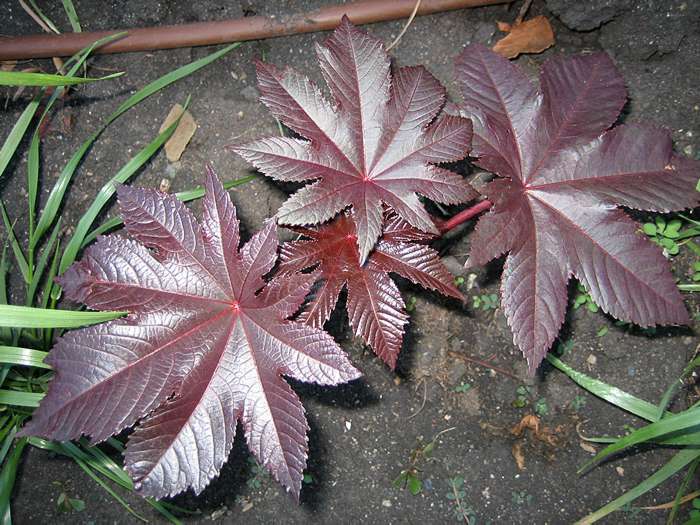
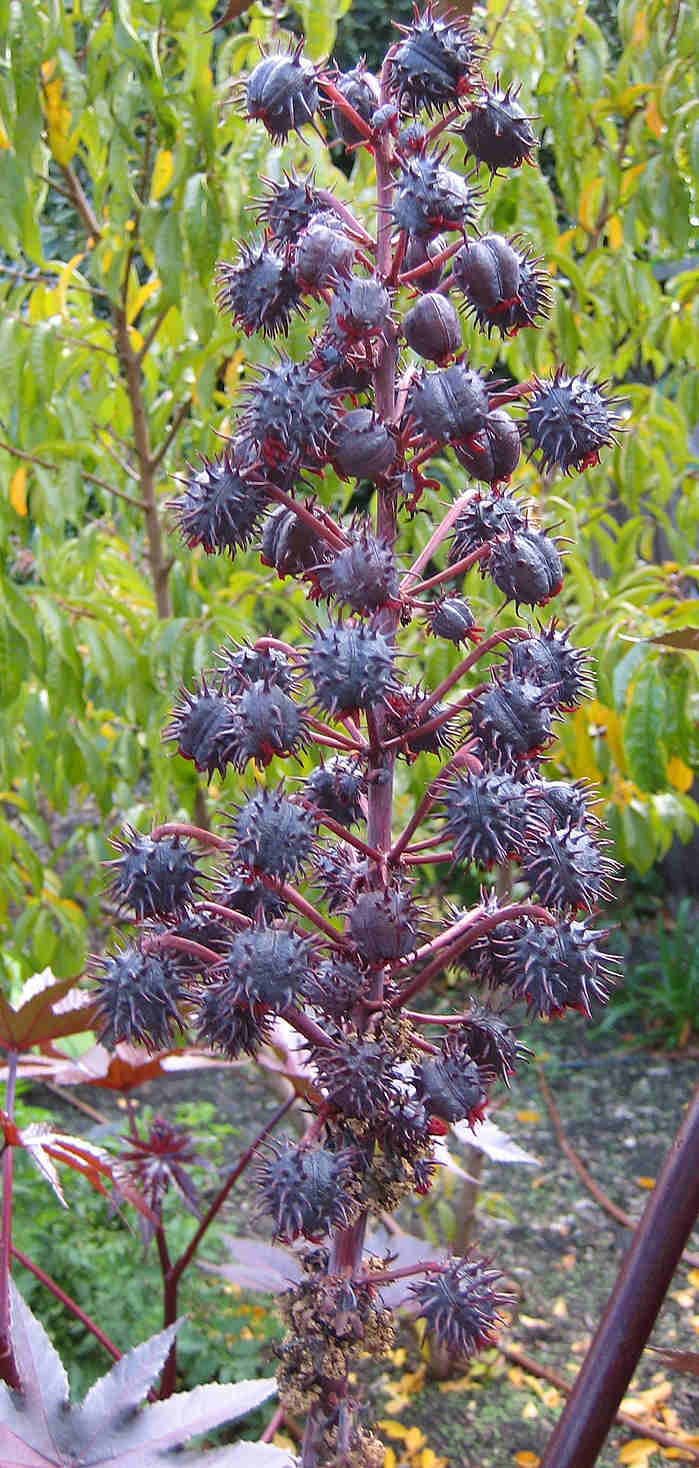
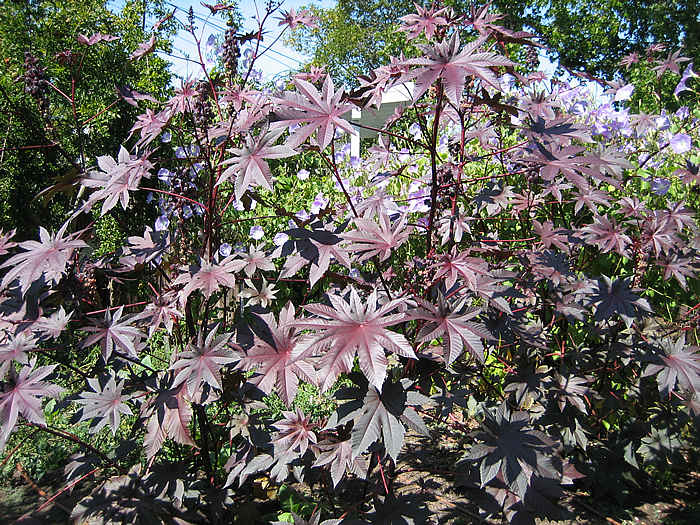
'NEW ZEALAND PURPLE CASTOR BEAN'. A showy variety with large deep purple leaves and stems. To 8 feet. Choice! Germinates in 1 - 4 weeks.
—Ricinus communis sanguineus. (10) RIC-1S. Packet: $2.50
100 grams: $15.00
'RED BIG-LEAF CASTOR BEAN'. Large blood-red leaves and bronze stems to 10 feet. Large seed.
—Ricinus communis Zanzibarensis. (10) RIC-1Z. Packet: $2.50
100 grams: $15.00
'ZANZIBAR BIG-LEAF CASTOR BEAN'. The largest leaves of all, bright green with white veins, up to 3 feet across. No red. Huge plant to 15 feet or more.
RIVEA (ri-VAY-a)
CONVOLVULACEAE. Large woody twiners or climbing shrubs with heart-shaped leaves and attractive morning-glory-like flowers. Grown for ornament in the greenhouse or outdoors in warm regions.
—Rivea corymbosa. (=Turbina corymbosa) (10) RIVE-6. Packet: $2.50
10 grams: $12.00
'OLOLIUQUI', 'CAMPANITA', 'CHRISTMAS FLOWER'. Large clusters of white, inch-wide flowers. Large woody twiner reaching great heights with age, and the trunk as thick as a man's thigh. Heart-shaped 4" leaves. Tropical America. Zone 10. A good honey plant. Nick seed to germinate in a few weeks.
ROBINIA (ro-BIN-ee-a)
LEGUMINOSAE. 'LOCUST'. Ornamental deciduous trees and shrubs of North America, grown for their showy white, pink or purple flowers and graceful pinnate foliage. They stand heat, drought and poor soil, and are excellent for erosion control and reclamation. Nitrogen fixing. Good street trees. Nick and soak, to germinate in 1 - 3 weeks or so.
—Robinia Pseudoacacia. (100) ROBI-16. Packet: $2.00
Ounce: $5.00, 1/4 Pound: $9.00
'BLACK LOCUST', 'FALSE ACACIA'. Fragrant white pea-like flowers in dense clusters to 4 - 8" long in May and June. Open-crowned tree to 80 feet, with graceful pinnate leaves. E. and Central U.S. Zone 3. A valuable and useful tree, producing hard, durable wood, and an excellent fuelwood crop. Produces up to 100 cubic meters per hectare at 10 - 20 years old, and can be coppiced. Good erosion control and soil builder, fixing 600Pounds N/acre in 20 year old stands. Good wildlife browse and bee forage, producing an exceptionally fine honey. The leaves crushed in water have been used to kill flies. The seeds are said to have been boiled for food by the Indians, but are toxic raw. One of our finest native trees. Yet another native species being falsely labeled an alien invader and being killed in the eastern US.
RODGERSIA (RO-jer-see-a)
SAXIFRAGACEAE. Asian woodland perennials preferring light shade to full sun, shelter from wind, and moist, rich deep soil. Related to Astilbe. Easily germinates at about 50° to 70°F.
—Rodgersia 'New Hybrids'. (200) RODG-NH. Packet: $2.50
(R. aesculifolia X henrici X pinnata hybrids)
Flowers in shades of white, yellow, and pink, June to August. Hardy perennial to 32", with foliage dark green to bronze. Zone 5. Prechill seed 4 weeks to germinate in 2 - 4 weeks.
ROMULEA (ro-mu-LEE-a)
IRIDACEAE. Crocus-like plants with narrow leaves and large, handsome, often brilliant flowers. Easy from seed - may reach flowering size in one year. Prefers moist soil, but any good loam will do. Named after Romulus. Variable.
—Romulea rosea. (10) ROMU-19. Packet: $2.50
'ONION GRASS'. Rosy to purplish-pink 6-petaled 1 1/2" flowers on short stems in spring. Tender bulb to 8", with grass-like leaves. South Africa. Zone 8. In Africa and Australia children eat the sweet unripe fruits, and some have sampled the bulbs, which are described as nutty with some bitterness. Good in coastal California, where it naturalizes in disturbed areas. Dormant seed, hold pots 2 years, GA-3 helps.
ROSA (RO-za)
ROSACEAE. Ornamental North Hemisphere shrubs and climbers, widely grown for their attractive flowers. Most are easily grown, the seed best sown in fall for spring germination, with stragglers over several seasons. Try roughing the seed on concrete and soaking a day or two until they sink, then plant in a gallon pot covered with loose, sandy soil. Screen pots to protect from mice and birds, and watch for powdery mildew. Prechill 2 - 3 months if planted out of season.
—Rosa chinensis 'Angel Rose'. (25) ROSE-35. Packet: $2.50
10 grams: $20.00
Click for photo »
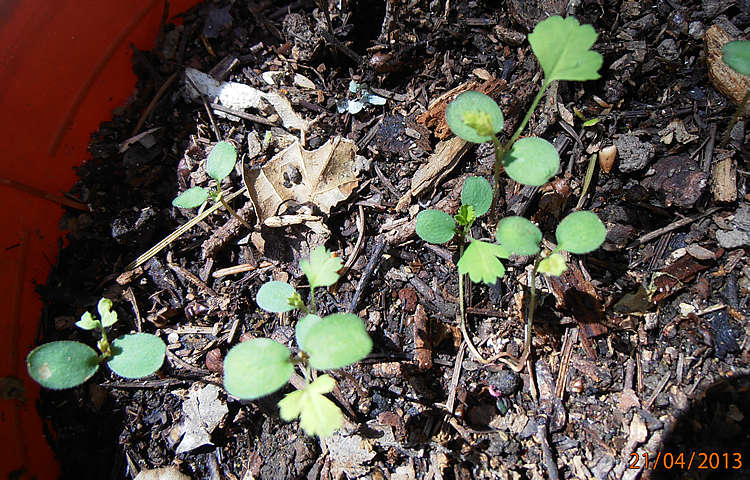
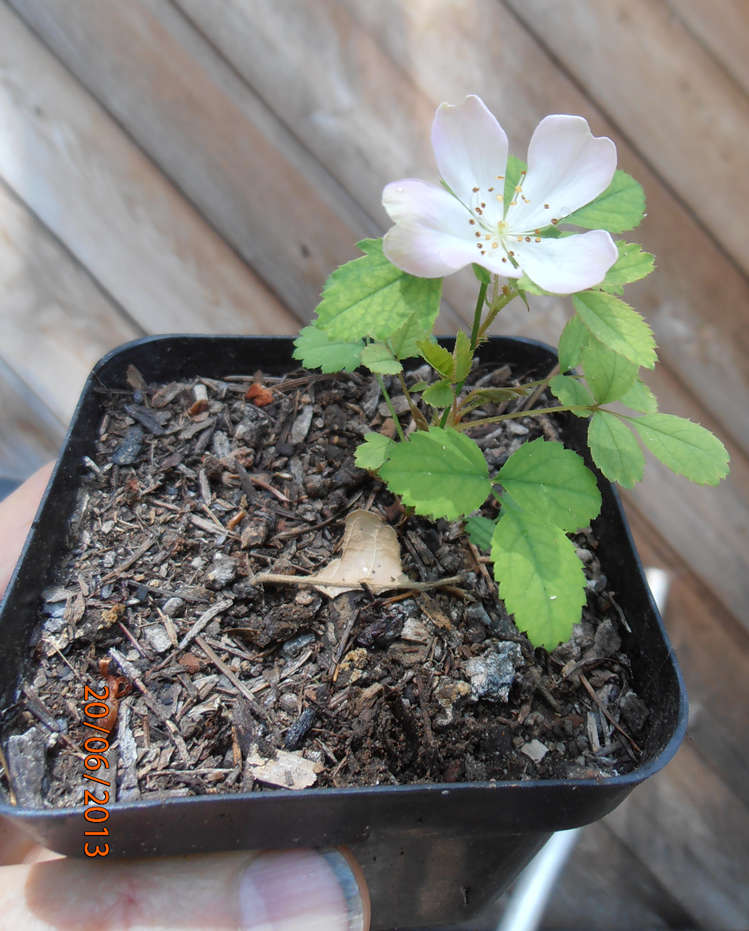
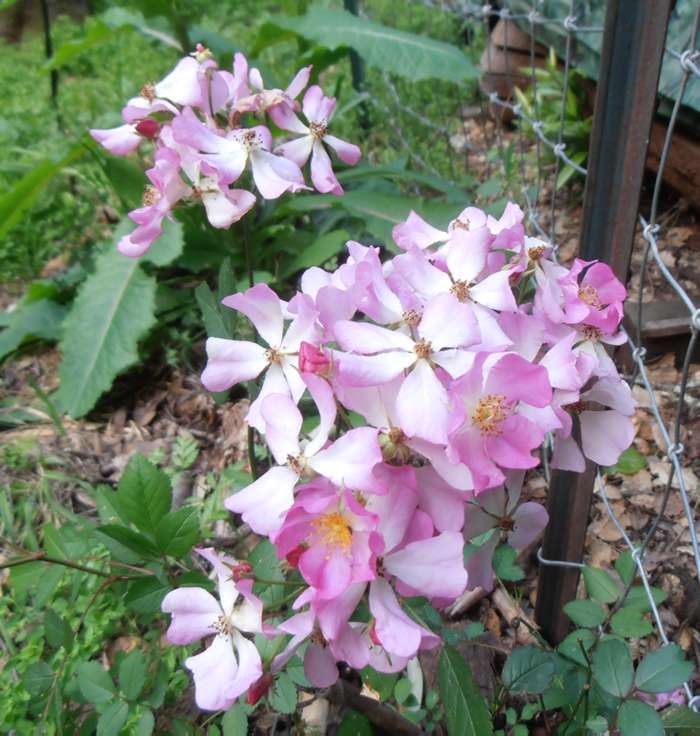
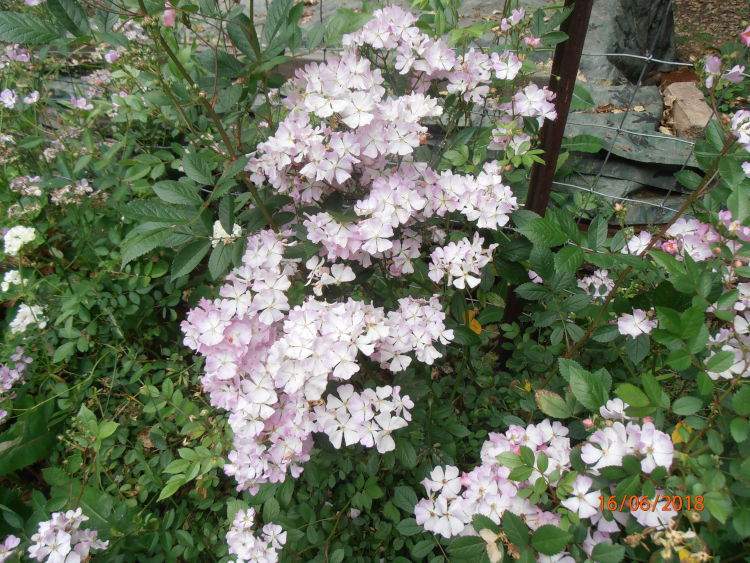
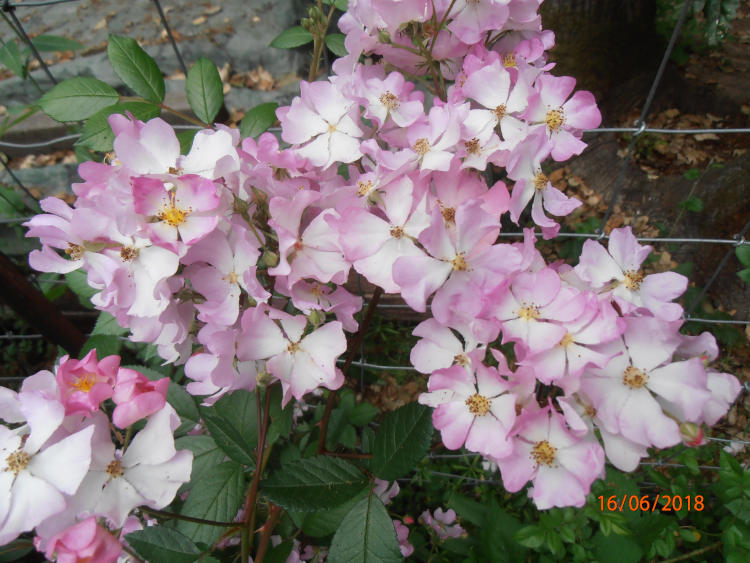
Also called 'Fairy Rose', a true miniature to only 10 - 18" tall, sometimes taller (to 8 feet if given support), with delicate, miniature 1 1/2" flowers in a good range of rose, pink, and white, with a high percentage of doubles. Germinates in 3 - 10 weeks warm, and blooms in 3 - 6 months. Choice! "Even at 2" high, had 1/8" rosebuds. Charming. We had a long, cold winter here with freezing temperatures at night and the little mini-shrubs from your seeds sailed through the cold, have leafed out, and now have buds. Wonderful! It has done the best for this area of roller-coaster temperatures."—Thelma Florczac, Las Vegas, Nevada.
—Rosa nutkana. (50) ROSE-120. Packet: $2.50
'NOOTKA ROSE'. Large fragrant rose-pink 2 1/2" wide flowers in June and July, followed by red hips. Shrub to 6 feet. Alaska to California. Zone 4. "Has the largest flowers of the Western species."—Bailey. "The hips are juicy, pleasantly acid, and a good source of Vitamin C."—Facciola. Leaves used as tea.
—Rosa pisocarpa. (100) ROSE-144. Packet: $2.50
'CLUSTER ROSE'. Pink inch-wide flowers in large clusters in summer, followed by red to orange hips. Arching shrub to 6 feet. B.C. to California. Zone 6. Hips eaten, leaves used as tea. Medicinal.
ROSCOEA (ros-KO-ee-a)
ZINGIBERACEAE. Thick-rooted perennials from China and the Himalayas. Good in the greenhouse or outdoors in mild climates. Best in peaty loam in part shade, and rest during dormancy.
—Roscoea auriculata. (25) ROSC-6. Packet: $3.00
Brilliant purple 1 1/2" flowers in July to September. Perennial to 16", with broad, lance-shaped leaves. Nepal and Sikkim. Zone 6. Germinates in 1 - 6 weeks.
RUBIA (ROO-bee-a)
RUBIACEAE. Widespread herbs with small flowers and whorled leaves. Interesting plants.
—Rubia tinctorum. (25) RUBI-23. Packet: $3.50
1/4 Ounce: $12.50, Ounce: $50.00
'MADDER'. Yellow starry flowers followed by red berries that turn black. Hardy perennial to 4 feet, with narrow 4" whorled leaves. S. Europe. Zone 6. The roots are the source of a brick-red dye. Germinates in 1 - 4 weeks warm.
RUBUS (ROO-bus)
ROSACEAE. Some 250 species worldwide, including many familiar cultivated berries. Easy in most soils.
—Rubus parviflorus. (100) RUBU-60. Packet: $2.50
Click for photo »
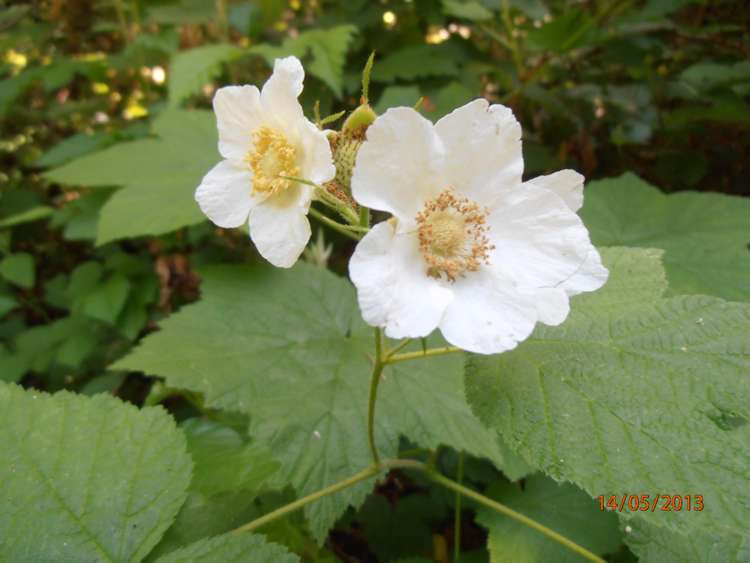
'THIMBLE-BERRY'. Large white 1 - 2" wide five petaled fragrant flowers in spring, followed by red 3/4" berries. Spineless shrub with large light green downy 5 - 10" leaves. Western North America. Zone 4. The berries and young shoots are eaten. Prechill 8 weeks or so to germinate in 2 months and up.
—Rubus spectabilis. (50) RUBU-76. Packet: $2.50
'SALMON BERRY'. Large inch-wide rose red or purplish flowers in spring, followed by salmon-red berries. Shrub to 12 feet or so, with few prickles. Alaska to California. Zone 6. The berries vary from delicious to insipid, depending on the site.
—Rubus 'Highbush Blackberry'. (100) RUBU-HB. Packet: $2.50
Wild blackberry with upright growth to 3 - 7 feet, bearing good edible fruit.
NEW—Rubus ursinus. (100) RUBU-84. Packet: $2.50
5 grams: $10.00
'PACIFIC DEWBERRY'. Scrambling prickly shrub to 5 feet or so, with white flowers. Sweet, aromatic black berries, produced best with consistent moisture. W. N. America. Zone 6.
RUDBECKIA (rud-BECK-ee-a)
COMPOSITAE. Showy annuals and perennials thriving in sun or part shade, giving an abundance of bloom in summer and autumn. Easy in almost any soil. Some are good for cutting. Most germinate in 1 - 2 weeks.
—Rudbeckia hirta 'Marmelade'. (1000) RUD-6M. Packet: $2.50
Ounce: $9.00, 1/4 pound: $25.00
Golden orange 4" flowers with deep black eye. Hardy annual to 2 feet or so. A nice variety of the classic 'black-eyed-susan'. Germinates in 1 - 2 weeks.
—Rudbeckia occidentalis. (50) RUD-18. Packet: $2.50
5 grams: $7.50 BULK OUT OF STOCK - packets are available
'WESTERN CONEFLOWER'. Unusual flower-heads consisting of purple-brown disk flowers in large conical to cylindric, almost black heads, 1 - 2" long, entirely lacking ray flowers. Hardy perennial to 6 feet. NW U.S. The unusual flowers are valuable in arrangements. Identical to 'Green Wizard'. Germinates in 1 - 4 weeks warm. GA-3 increases percent.
—Rudbeckia subtomentosa. (1000) RUD-20. Packet: $2.50
1/4 Ounce: $7.50 BULK OUT OF STOCK - packets are available
'SWEET CONEFLOWER'. Yellow 3" flowers with purple-brown centers. Hardy perennial to 3 - 4 feet. Wisconsin to Louisiana. Beautiful bloom from August to September. Good in wettish, not swampy ground. Give seed 8 weeks cold to germinate in 1 - 2 weeks warm, or give GA-3 to germinate in 2 - 8 weeks. This lot non-dormant and germinates in 1 - 2 weeks.
—Rudbeckia triloba 'Prairie Glow'. (50) RUD-22P. Packet: $4.00
Beautiful large flowers with yellow-tipped orange petals and a dark eye. Hardy, late-blooming perennial to 3 feet, with dark stems. Zone 3. Germinates in 1 - 2 weeks.
RUMEX (ROO-mex)
POLYGONACEAE. A large genus of mostly temperate region perennials, many grown for food or medicine. Attractive foliage and the seed stalks are good in dried arrangements. Easily grown in most soils, and easy from seed, which may be viable for 80 years.
NEW—Rumex Acetosella. (300) RUME-5. Packet: $2.50
5 grams: $7.50
'SHEEP SORREL'. Low hardy perennial from creeping rootstocks, with arrowhead-shaped leaves and reddish flowerstalks to 1 1/2 feet tall. N. Hemisphere. Zone 2. The sour leaves are cooked in soups, used as seasoning, added sparingly to salads, sandwiches. Much in demand for preparing the Essaic anti-cancer remedy. Can be weedy. Aged seed best, and GA-3 helps germination, 1 - 4 weeks.
NEW—Rumex crispus. (250) RUME-10. Packet: $2.50
5 grams: $7.50
'CURLY DOCK'. Hardy perennial to 5 feet, with long clusters of small flowers becoming brown seedheads. Eurasia. Zone 2. The thick roots are used medicinally and the young leaves are eaten. Germinates in 1 - 3 weeks.
"The danger is not that a particular class is unfit to govern. Every class is unfit to govern."—Lord Acton, 1881.
RUSCUS (RUS-kus)
LILIACEAE. Attractive western Eurasian shrubs.
—Ruscus aculeatus. (20) RUSC-4. Packet: $2.50
Seed stored moist and refrigerated.
Click for photo of seedlings »
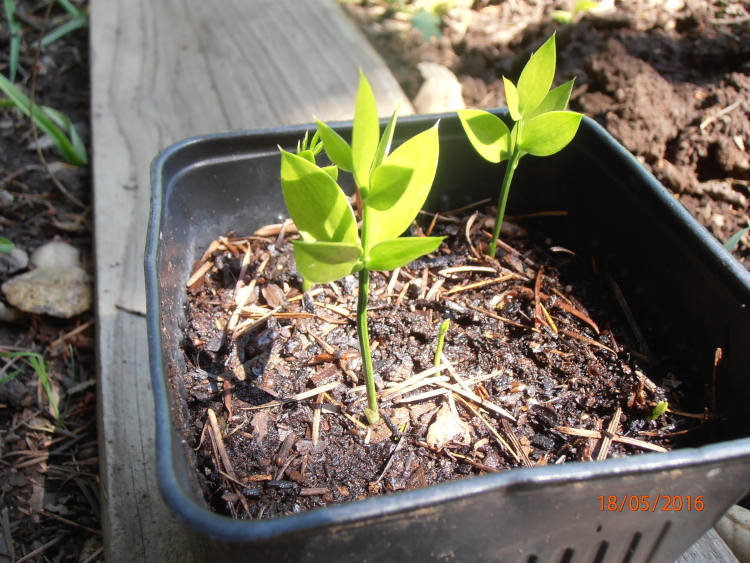
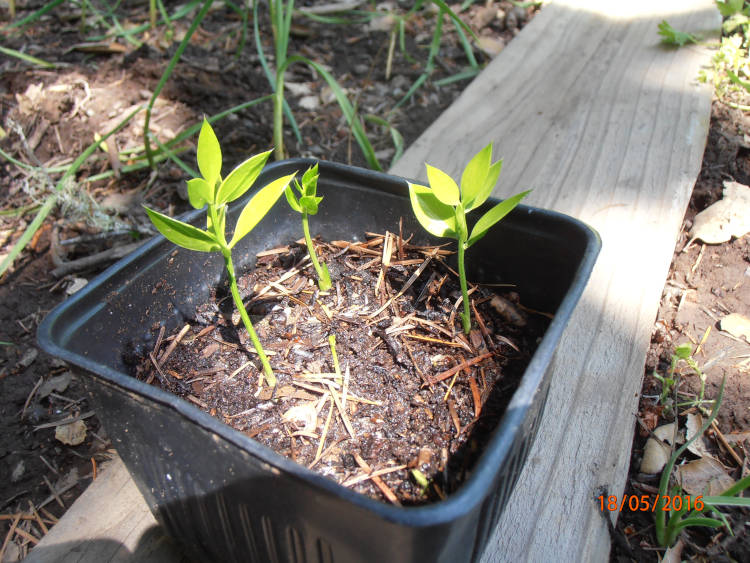
'BUTCHER'S BROOM'. Dark glossy green 1 1/2" leaves bear small flowers in their centers, followed by attractive red or yellow 1/2" berries. Low dioecious shrub to 3 feet. Mediterranean. Zone 6. The young shoots have been eaten like asparagus, and the root is used medicinally against swollen legs, hemorrhoids, to tone the veins, and increase the blood flow to the brain and extremities. Germination may be prolonged—sow in a pot and hold several years. Worth the wait!
RUTA (ROO-ta)
RUTACEAE. Aromatic herbs and shrublets grown for scent, flavoring and medicine. Easy in well-drained moist soil. Germinates in 1 - 3 weeks, GA-3 helps, and the seed will give good germination for 2 to 5 years.
—Ruta graveolens. (100) RUTA-4. Packet: $2.50
5 grams: $10.00 NEW PRICE
'RUE', 'HERB-OF-GRACE'. Yellow four-petaled flowers in summer. Hardy perennial to 2 - 3 feet, with finely divided blue-green foliage. South Europe. Zone 5. The powerful, pungent aroma is said to repel pests. Used sparingly in cooking, and is highly valued medicinally. May cause rash in sensitive people.