GERANIACEAE. Widely distributed herbs and succulents grown for their showy flowers or scented leaves. Excellent for bedding or house plants. Easily grown in well-drained soil, in full sun outdoors, or in cool part of the greenhouse. Keep on the dry side in winter. Blooms best when pot bound, and many are good in hanging baskets. Germinates best with a light nicking, in 1 - 8 weeks. Seed viable about 3 years.
—Pelargonium mollicomum. (10) PELA-99. Packet: $4.00
Click for photo»
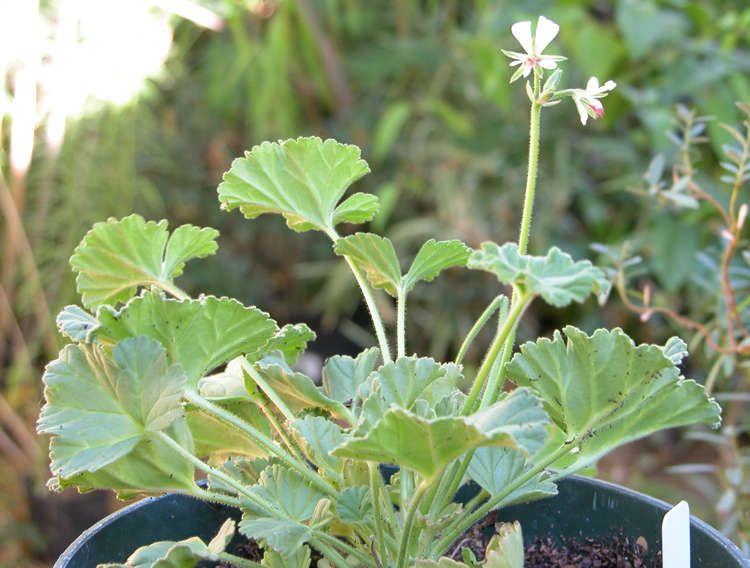
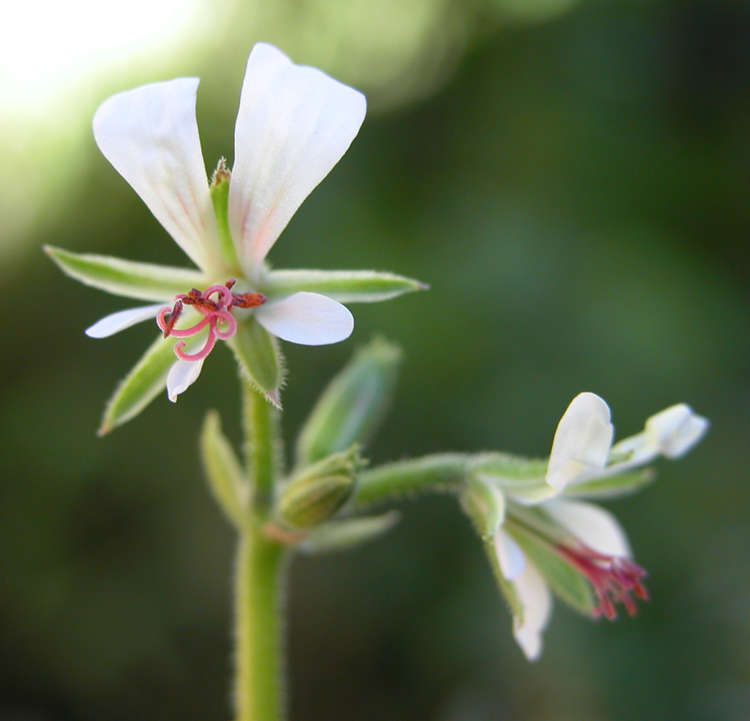
Creamy white flowers with pink or red veining. Tender perennial with aromatic fuzzy leaves. Forms small tubers. S. Africa. Zone 9. Said to have a 'fruity' scent. Germinates in 1 - 3 weeks.
PENSTEMON (PEN-ste-mon or pen-STE-mon)
SCROPHULARIACEAE. 'BEARD-TONGUE'. Popular perennials and shrublets grown for their showy spring and summer tubular blooms. Many are Western U.S. natives and are good, drought-resistant landscaping material. Best in well-drained soil and full sun. Don't over-water. Excellent in rockeries or pots. Many easy from seed. Germinates in 1 - 6 weeks and up, most of the perennials within 2 months, some species up to 4 months. Sow early, January to April depending on time needed, as cool temperatures are best. Seed long lived, with half-life of 4 - 8 years. Many fine ornamentals in this genus.
Many of the more difficult species are best germinated with 250ppm GA-3, then 8 weeks cold (up to 12 - 16 weeks cold for real tough ones). More than 250ppm will give too much etiolation (stretching). They often germinate at cold temperatures, and light helps some species.
—Penstemon attenuatus. (1000) PENS-16. Packet: $2.50
Yellow to blue or violet 3/4" flowers in summer, on slender stems to 2 feet. Hardy perennial with a rosette of 4" leaves. Washington to Idaho. Zone 4. Germinates in 1 - 2 weeks, fresh seed needs GA-3.
—Penstemon barbatus 'Rondo'. (50) PENS-18R. Packet: $2.50
Inch-long flowers in a bright mix of red, pink, and violet shades, blooming around the stem, June to September. Dwarf hardy perennial to 16", with narrow leaves. Zone 3. Very nice. Germinates in 2 - 8 weeks.
—Penstemon cyanocaulis. (250) PENS-46. Packet: $2.50
5 grams: $7.50
'BLUESTEM PENSTEMON'. Dense spikes of blue tubular flowers in spring and summer. Hardy perennial to 8 - 24", with narrow leaves. Colorado and Utah. Zone 3. Stands drought. Sow in fall or prechill seed 6 - 8 weeks.
—Penstemon Digitalis 'Husker's Red'. (25) PENS-52R. Packet: $3.00
1/4 gram: $9.00, Gram: $25.00
An improved selection from Husker's Red, with showy white flowers with a pink tinge, June to August, and bold brownish-red foliage. Hardy perennial to 3 feet. Zone 3. "I'd given up on Red Husker in our area, as the plants of all other selections that I'd tried were spindly, with flowers that weren't worth the trouble of having the plant, and most plants couldn't survive our climate."—H.M., Maryland. Give GA-3 to germinate in 1 - 4 weeks.
—Penstemon Whippleanus. (200) PENS-206. Packet: $2.50
'CHOCOLATE DROP'. Deep, dark, purple-blue 1" bells in dense Clusters in summer. Hardy perennial to 8 - 24". Rockies. Zone 4. Nice!
PENTHORUM (pen-THOR-um)
PENTHORACEAE. Several species.
—Penthorum sedoides. (1000) PENH-8. Packet: $2.50
'VIRGINIA STONECROP'. Small starry white to yellow-green flowers in clusters. Hardy perennial to 2 feet, with good fall color. E. US. Zone 5. Prechill seed.
"One need only act, without fear of punishment and without hope of reward; act from the center of one's soul."—U. K. LeGuin.
PERIDERIDIA (pe-ri-der-ID-ee-a)
UMBELLIFERAE. Western US perennials.
—Perideridia Gairdneri. (100) PERI-10. Packet: $2.50
'YAIMPAH'. White flowers in dense umbels in Summer. Slender hardy perennial to 4 feet, with narrow aromatic leaves. W. U.S. Zone 4. The thick fragrant roots were eaten in great quantities by many tribes, and the seeds used for flavoring. Prechill seed 12 - 20 weeks, or sow in fall.
—Perideridia kellogii. (50) PERI-14. Packet: $3.00
'YAMPAH'. Umbels of white flowers on a slender perennial to 4 feet, with pinnate leaves. California. Zone 7. The thick roots were eaten by many tribes. Young leaves eaten in spring, and the seeds have a caraway-like flavor. Prechill 4 - 12 weeks.
PETRORHAGIA: See Tunica Saxifraga
PHACELIA (fa-SE-lee-a)
HYDROPHYLLACEAE. Showy Western Hemisphere annuals and perennials with pinnately-divided leaves and curved spikes of flowers. Best in full sun, giving a profusion of bloom. Good bee plants. May cause rash in some.
—Phacelia campanularia. (1000) PHAC-2. Packet: $2.00
Ounce: $8.00, 1/4 Pound: $20.00
'DESERT' or 'CALIFORNIA BLUEBELLS'. Brilliant royal blue, bell-shaped, inch-wide flowers, produced abundantly 2 months from seed. Hardy annual to 6 - 9", good for carpeting or edging. Stems and leaf-edges are red, and are fragrant when bruised. California deserts. Best in poor, dry, sandy soil. Makes a nice pot plant. Germinates in 1 - 4 weeks at cool temperatures.
—Phacelia nemoralis. (100) PHAC-60. Packet: $2.50
5 grams: $12.00
'SHADE PHACELIA'. White flowers in dense, curved, fiddleneck spikes, April to July. Perennial to 3 - 6 feet, thriving in shady spots. West coast US. Zone 5 or 6. Attracts bees.
—Phacelia tanacetifolia. (1000) PHAC-150. Packet: $2.00
Ounce: $6.00, 1/4 Pound: $12.00, Pound: $32.00
'BEE FOOD', 'FIDDLENECK'. Fragrant, clover-scented blue to lavender 1/2" flowers in dense curved spikes in summer. Profusely blooming hardy annual to 1 1/2 - 3 feet, with finely cut ferny leaves. California to México. Excellent honey plant, good in heavy soil. Germinates in 1 - 4 weeks at cool temperatures.
PHALARIS (fa-LAR-is or FAL-ar-is)
GRAMINEAE. Ornamental annual and perennial grasses; about 15 species of the North Hemisphere. Robust, hardy plants, grown for birdseed, forage, erosion control, wildlife food, and ornament.
—Phalaris aquatica. (=tuberosa) (100) PHAL-3. Packet: $2.50
5 grams: $7.50, 25 grams: $20.00
Click for photo »
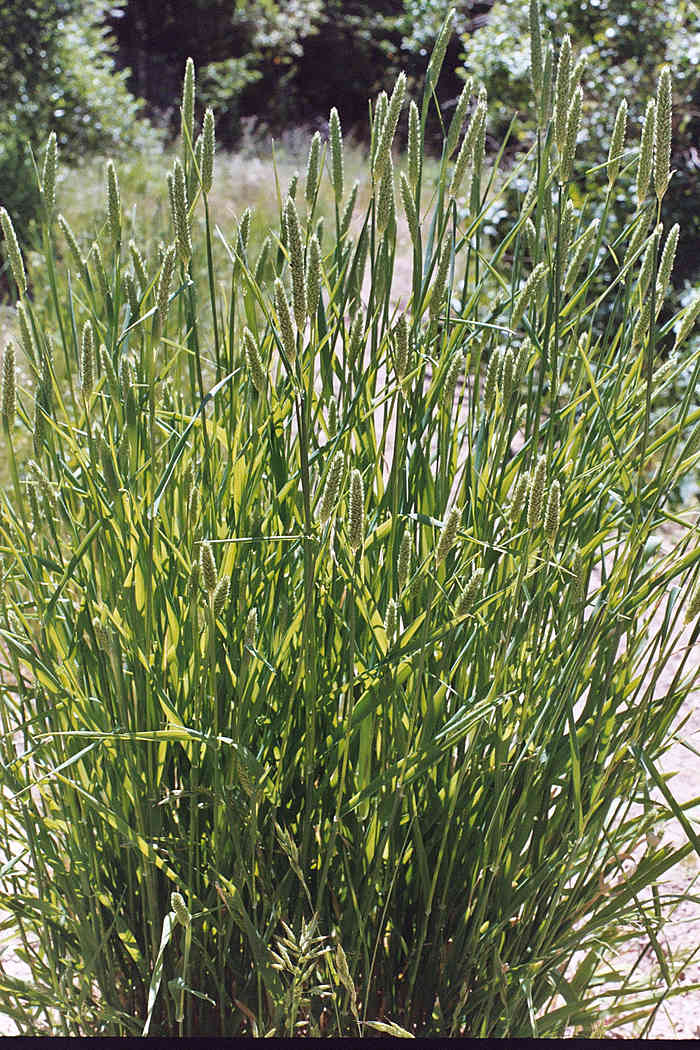
'HARDING GRASS'. Half-hardy perennial bunch grass to 4 - 6 feet, with dense 2 - 6" spikes. Mediterranean; naturalized in California and Australia. Zone 8. Excellent erosion control, good wildlife food and cover, highly ornamental and stands considerable hard frost and dry hillsides. Fire resistant. Germinates in 1 - 3 weeks, light plus KNO3 helps.
PHASEOLUS (fa-see-O-lus)
LEGUMINOSAE. American twining beans.
—Phaseolus polystachios. (10) PHAS-34. Packet: $3.50
10 grams: $20.00
'THICKET BEAN'. Hardy perennial edible bean from a carrot-like root. Tall twiner to 30 feet, with purple flowers. N. America. An ancient crop, grown for 9000 years. Zone 5. High protein, will produce some beans the first year, and lots by the third year. Plant 2 for best pollination. "To me the flavor is nut-like, with a smoky after taste. Really nothing like it in the bean world."—Ken Asmus. Nick seed. Germinates in 1 - 2 weeks.
PHILODENDRON (FEE-lo-DEN-dron)
ARACEAE. Popular tropical American aroids, most vines or shrubs. Grown in the greenhouse or as long-lived house plants. Probably 500 species. Easy.
—Philodendron Selloum. (=Philodendron bipinnatifidum). (100) PHILO-76. Packet: $2.50
Gram: $12.00 (900 seed)
Huge, deeply-divided 3 foot dark green leaves on an upright shrub to 6 feet. S. Brazil. Juvenile leaves arrowhead-shaped, not divided. Stands some frost, probably down to 20°F, Zone 9. "The hardiest big-leafed Philodendron used outdoors."—Sunset. Easy from seed which germinates in 2 - 8 weeks.
PHLOMIS (FLOW-mis)
LABIATAE. Vigorous perennials with whorled, yellow, purple or white flowers and often woolly foliage. The tall kinds are good in the back border and wild garden. Most stand drought and poor soil, full sun and dry slopes suit them well. Easy, old-fashioned garden plants. Germinates in 2 - 6 weeks.
—Phlomis tuberosa. (25) PHLO-84. Packet: $3.00
Click for photos »
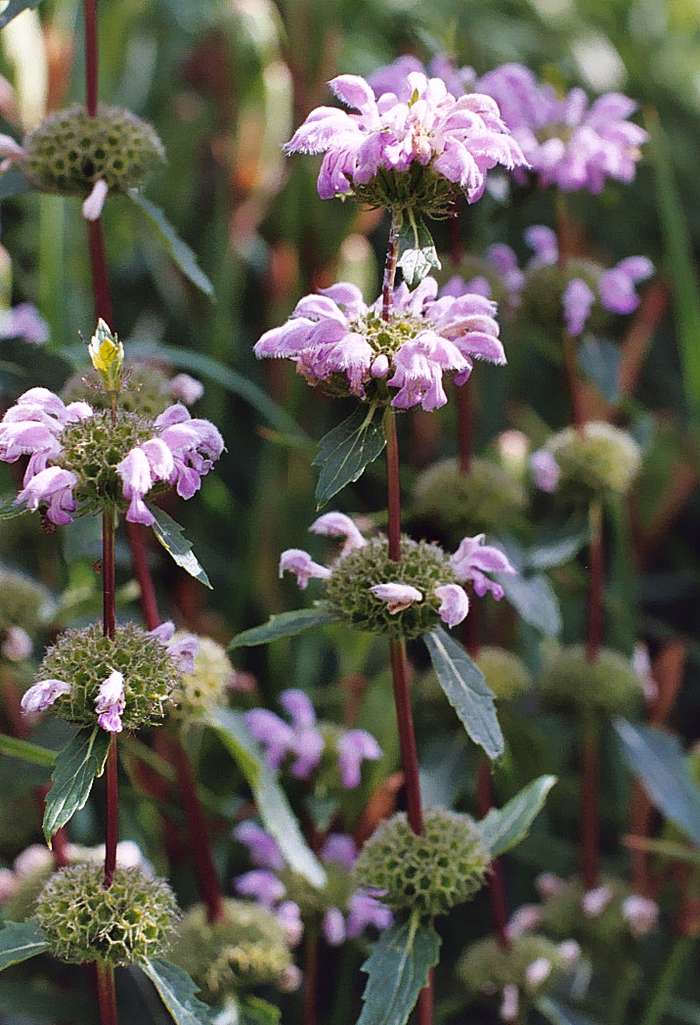
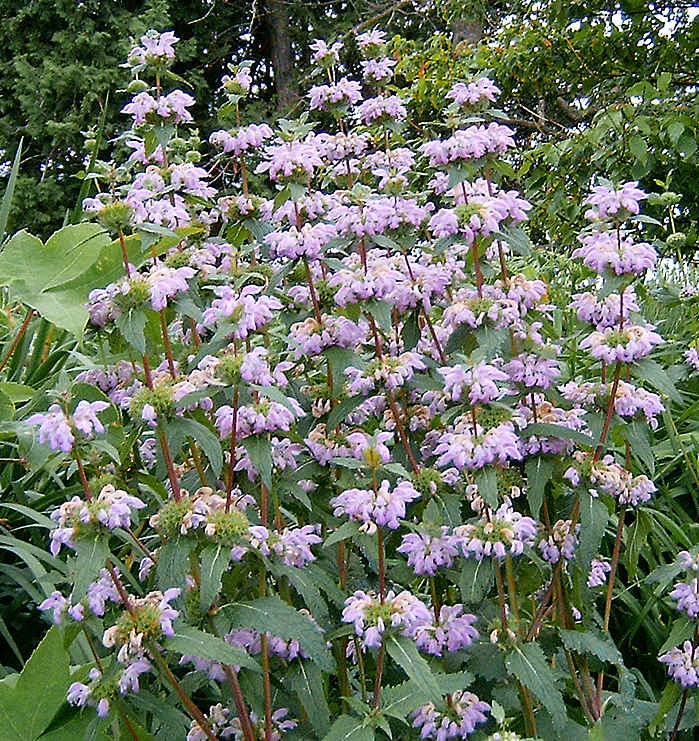

Violet 3/4" flowers in whorls in foot-long spikes, June to August. Hardy perennial to 3 - 6 feet, with large 10" leaves. Central Eurasia. Hardy to Zone 5 at least. The tuberous roots are eaten by the Kalmyks of central Asia. Germinates in 2 - 4 weeks.
PHLOX (FLOKS)
POLEMONIACEAE. Popular annuals, perennials, or shrubs of North America and East Asia. Easily grown in rich moist soil and full sun. Most are hardy. The annuals bloom well in pots. Divide perennials every few years to keep them blooming well.
—Phlox Drummondii Twinkle Dwarf Mix. (250) PHLX-16T. Packet: $2.50
10 grams: $12.50, 25 grams: $20.00
'STAR PHLOX'. Star shaped bicolor flowers with pointed petals in shades of pink, red, white, and lavender-blue. Compact hardy annual to 6 - 12".
PHOENIX (FEE-nix)
PALMAE. About 17 species of palms ranging from tall trees to dwarf trunkless plants. Good tub plants in the North, or outdoors in California and the South. Seeds germinate in one to several months at very warm temperatures and are long lived.
—Phoenix Roebelinii. (25) PHOE-13. Packet: $2.50
100 seed: $6.00, 500 seed: $12.00
'PYGMY DATE PALM'. Tiny palm to about 6 feet, with small, 1 - 4 foot shining dark green fronds and tiny black fruit. Slow growing elegant pot plant, best in part to full shade or indoors. Laos. Zone 9. Germinates in about 8 - 12 weeks very warm.
PHUOPSIS (foo-OP-sis)
RUBIACEAE. Small rock garden plants valued for their heads of starry flowers. Easily grown, attractive and fairly hardy. Most germinate readily.
—Phuopsis stylosa. (=Crucianella stylosa). (50) PHUO-4. Packet: $2.50
Tiny starry rose-pink flowers in 1/2" heads from June to August. Trailing and mat forming half-hardy perennial grown as an annual. Whorled needle-like leaves. Iran. Zone 5. The foliage is vanilla scented, and the flowers are spicy-sweet scented. Germinates in 1 - 2 weeks.
PHYSALIS (FI-sal-is)
SOLANACEAE. Widespread annual and perennial herbs grown for their flowers and ornamental or edible fruits, enclosed in a papery husk. Easily grown in a warm, sunny spot. Start indoors early.
—Physalis acutifolia. (100) PHYS-2. Packet: $2.50
Photo: https://secure.flickr.com/photos/patrick_dockens/6141354147/
http://www.fireflyforest.com/flowers/3448/physalis-acutifolia-sharpleaf-groundcherry/
Flower: http://calphotos.berkeley.edu/cgi/img_query?enlarge=0000+0000+1009+1772
Fruit: http://calphotos.berkeley.edu/cgi/img_query?enlarge=0000+0000+1009+1778
'WRIGHT'S GROUNDCHERRY'. White to light yellow 3/4" flowers with yellow centers, followed by inch-long husk tomatoes. Annual to 1 foot, with 2" wavy-margined leaves. California to Texas. They were eaten by Indians, said to be tasty. Germinates in 1 - 12 weeks, best with KNO3, light, or GA-3 helps.
—Physalis Alkekengi. (=Physalis Franchetii). (100) PHYS-5. Packet: $2.50
10 grams: $12.00 (about 650 seed per gram)
'CHINESE LANTERN PLANT', 'WINTER CHERRY', 'STRAWBERRY TOMATO', 'ALKEKENGI' (Arabic name). Brilliant orange to blood red inflated 2" calyces surrounding the red berries. Excellent in dried arrangements. Half hardy bushy perennial to 3 feet. Often grown as an annual. Asia. Zone 4. The berries are said to have a sweet acid flavor and have been eaten raw or cooked, and as a diuretic. Germinates in 1 - 4 weeks, light or GA-3 helps.
—Physalis peruviana. (=Physalis edulis) (50) PHYS-64. Packet: $2.50
5 grams: $10.00, 25 grams: $36.00
'GOLDENBERRY', 'POHA', 'TOPO TOPO', 'CAPE GOOSEBERRY'. Bright yellow marble-sized berries enclosed in a husk. Yellow bell-shaped flowers. Bushy tender perennial to 6 feet. Andes. Zone 8. The ripe fruit are delicious eaten raw in salads or made into jams or preserves, sauces, or dried like raisins. Easily grown, yielding 3 - 30 tons per hectare. Long season, best in poor soil and warm areas. Seed is viable 4 - 5 years and germinates in 2 - 4 weeks.
PHYSOCHLAINA (fee-so-KLAY-na)
SOLANACEAE. Rare Asian perennials grown in the rock garden or medicinal garden.
—Physochlaina orientalis. (10) PHYSK-12. Packet: $4.00
Click for photo »
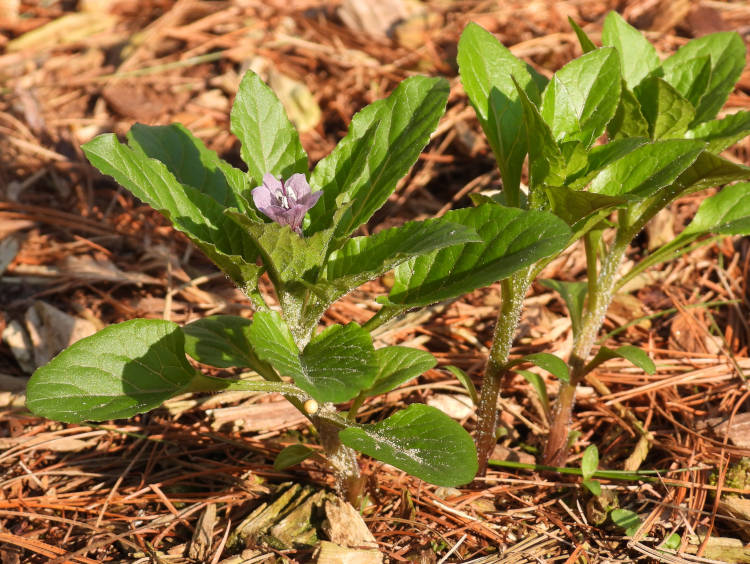
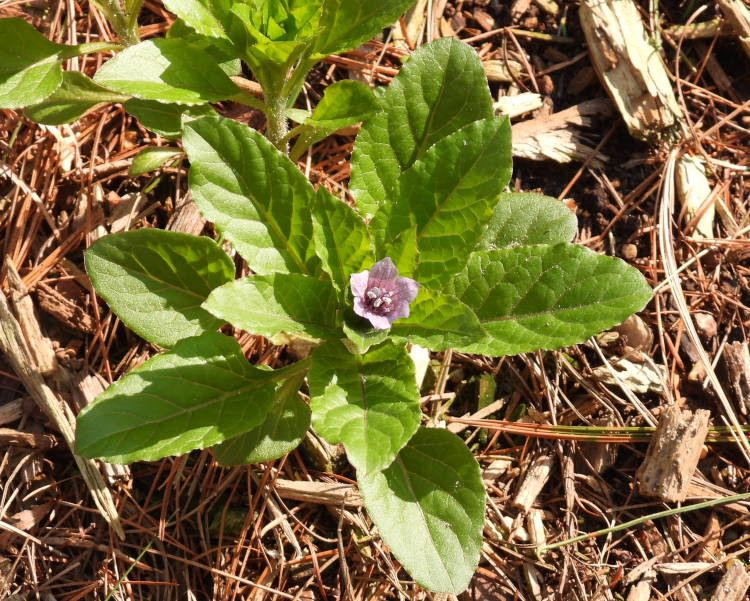
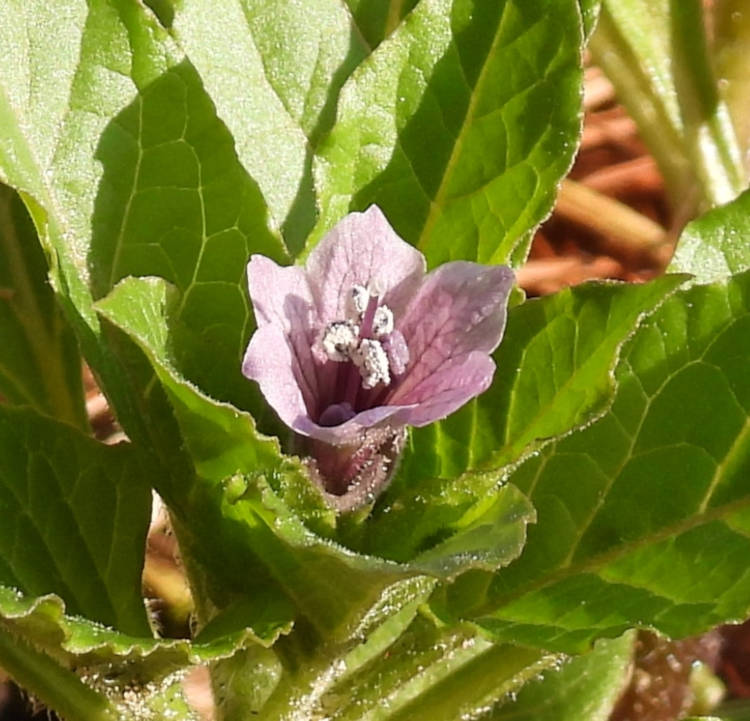 Photos courtesy Rich Sanders.
Purple-blue trumpet-shaped 1/2" flowers in handsome clusters. Hardy perennial to 1 1/2 - 2 feet. Central Asia. Best in well-drained soils, in sun or part shade. Blooms early. Used medicinally in Asia much like henbane. Rare and choice. Germinates readily in 2 - 3 weeks at warm temperatures.
PHYSOSTEGIA (fi-so-STE-jee-a)
LABIATAE. 'FALSE DRAGONHEAD'. Ornamental hardy American perennials with spikes of showy flowers. Easily grown in sun or part shade and moist soil. Beautiful in the border or wild garden. Excellent for cut flowers, which remain in whatever position they are bent, hence the name 'Obedient Plant'. Sow from January to May, germinates in 1 - 4 weeks at warm temperatures, with some stragglers.
—Physostegia virginiana 'Rose Crown'. (25) PHOS-4R. Packet: $2.50
'ROSE OBEDIENT PLANT'. Large, rose, inch-long snapdragon-like flowers in dense 10" spikes in summer. Hardy perennial to 2 feet, with narrow leaves. E. U.S. Zone 4. Easily grown hardy florist material.
PHYTOLACCA (fi-to-LA-ka)
PHYTOLACCACEAE. About 25 species ranging from herbs to trees. Grown for ornament, food and medicine. Easily grown in most soils. Seed long-lived (40 years or more), and may germinate readily; some need cold treatment. An interesting and often bizarre genus, one species was alleged to generate a strong electric charge. The young shoots of several are eaten, though mature leaves and roots are poisonous. Previous recommendations of boiling in 2 waters were overcautious—P. americana has been grown as a commercial vegetable near Philadelphia for 200 years. As one fellow wrote—"Anyone who says you should boil poke should be required to boil their asparagus!" Sieve-tubes with P-type plastids.
—Phytolacca acinosa. (25) PHYO-2. Packet: $2.50
Click for photo »
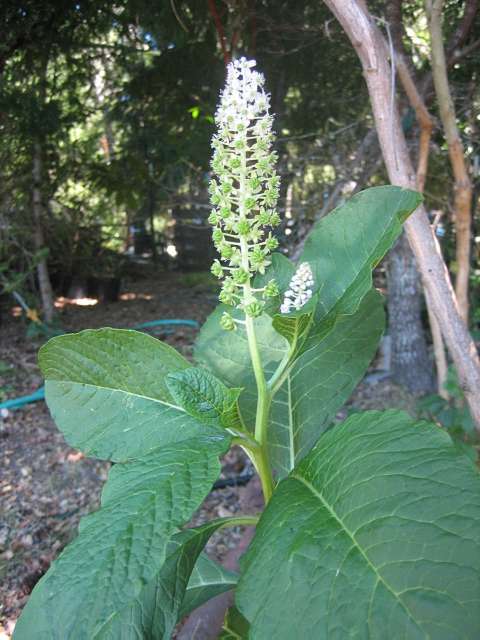

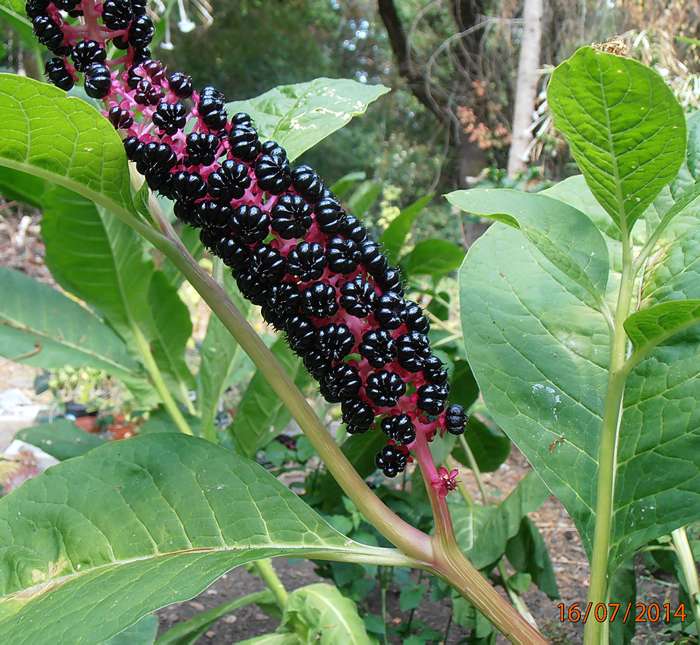
'HIMALAYAN POKEBERRY'. Long racemes of white flowers followed by long columns of shining black berries. Hardy perennial to 3 - 5 feet, with large leaves up to 10" long which provide autumn color. Himalayas to 9,000 feet, through China and Japan. Zone 6. The young leaves, cooked well in several changes of water are eaten in India. The root is used medicinally, and in ancient China were used by sorcerers. Aged seed germinates in 2 - 6 weeks.
—Phytolacca americana. (100) PHYO-4. Packet: $2.50
Ounce: $10.00
Click for photo »
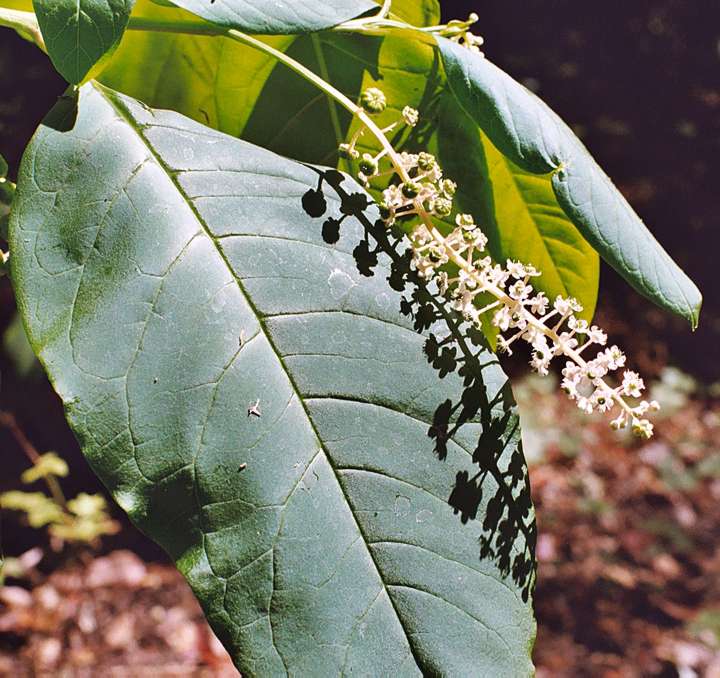
'POKE', 'SKOKE', 'POCAN', 'CANCER-ROOT'. Small white or purplish flowers in 6" spikes followed by attractive purple berries. Hardy perennial to 12 feet, with bold foliage and purplish stems. E. N. America. Zone 4. The young shoots to 6" tall are esteemed as a succulent vegetable. Root poisonous but a valuable medicine. Berries eaten by birds but toxic to people. Kills the snails that carry bilharzia. Give seed 3 months cold treatment to germinate in 1 - 2 weeks. GA-3 helps. Year-old seed germinates better.
I had excellent results self-treating for Lyme disease with Phytolacca americana root—this publication is to place this information in the public domain in order to prevent possible future patenting.
—Phytolacca americana 'Silberstein'. (50) PHYO-4S. Packet: $2.50
10 grams: $7.50
Click for photo »

'VARIEGATED POKE'. Leaves have moderate to heavy white borders and/or flecking. Variable from seed, some plants with stable variegation, others put out some green shoots. Interesting. Give seed 8 - 12 weeks pre-chill to germinate in 1 - 3 weeks. Very nice!